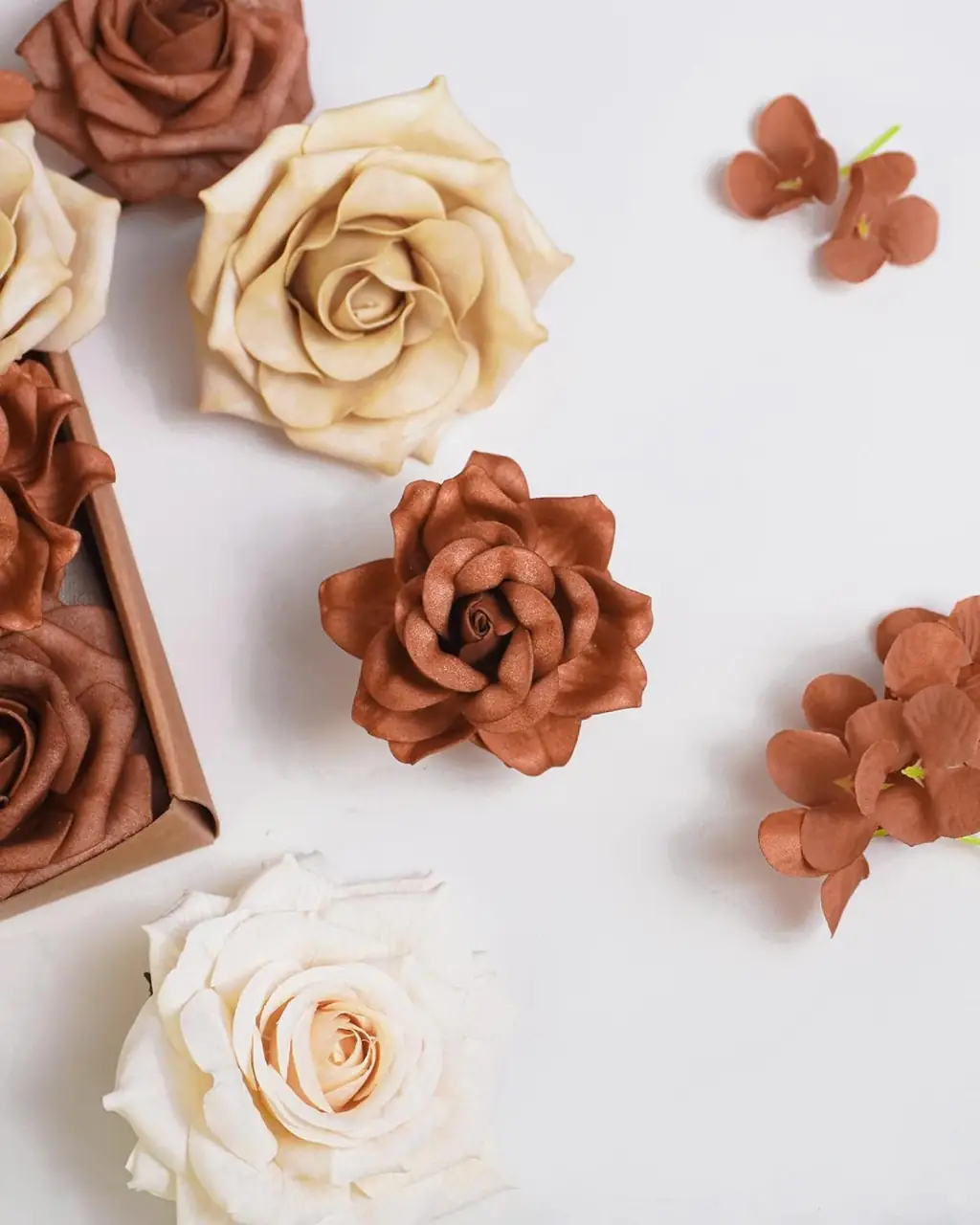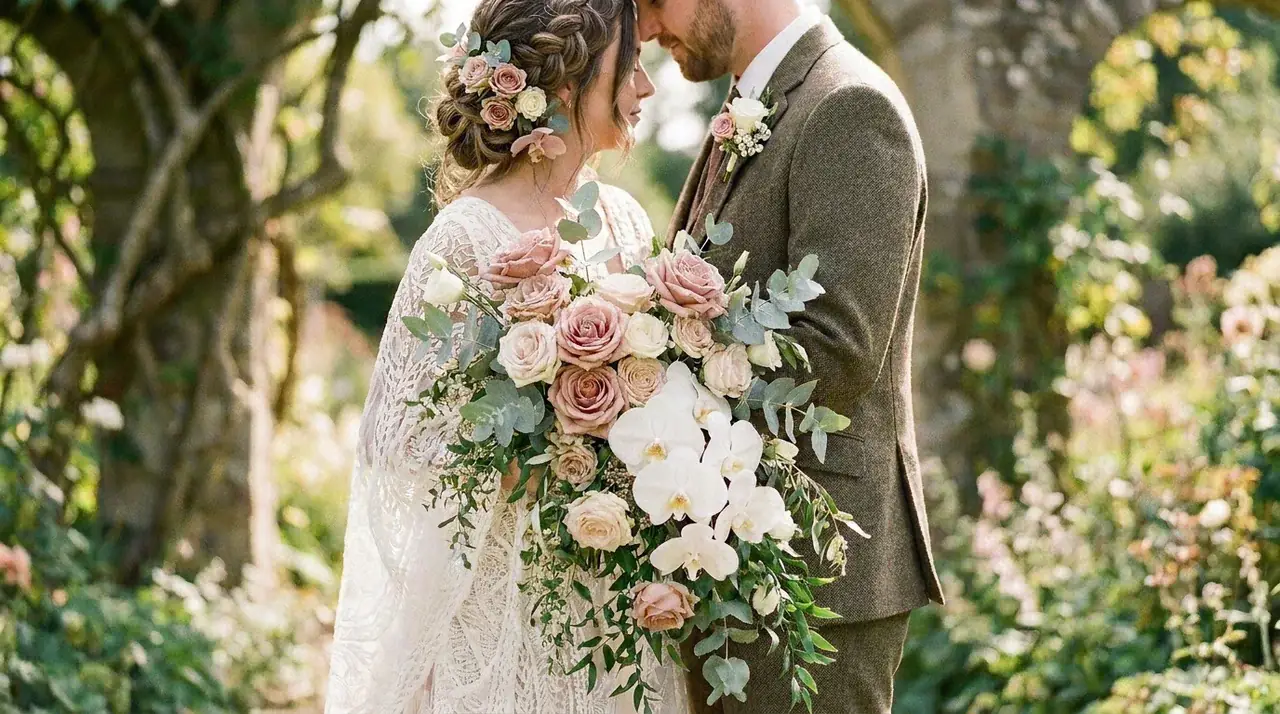
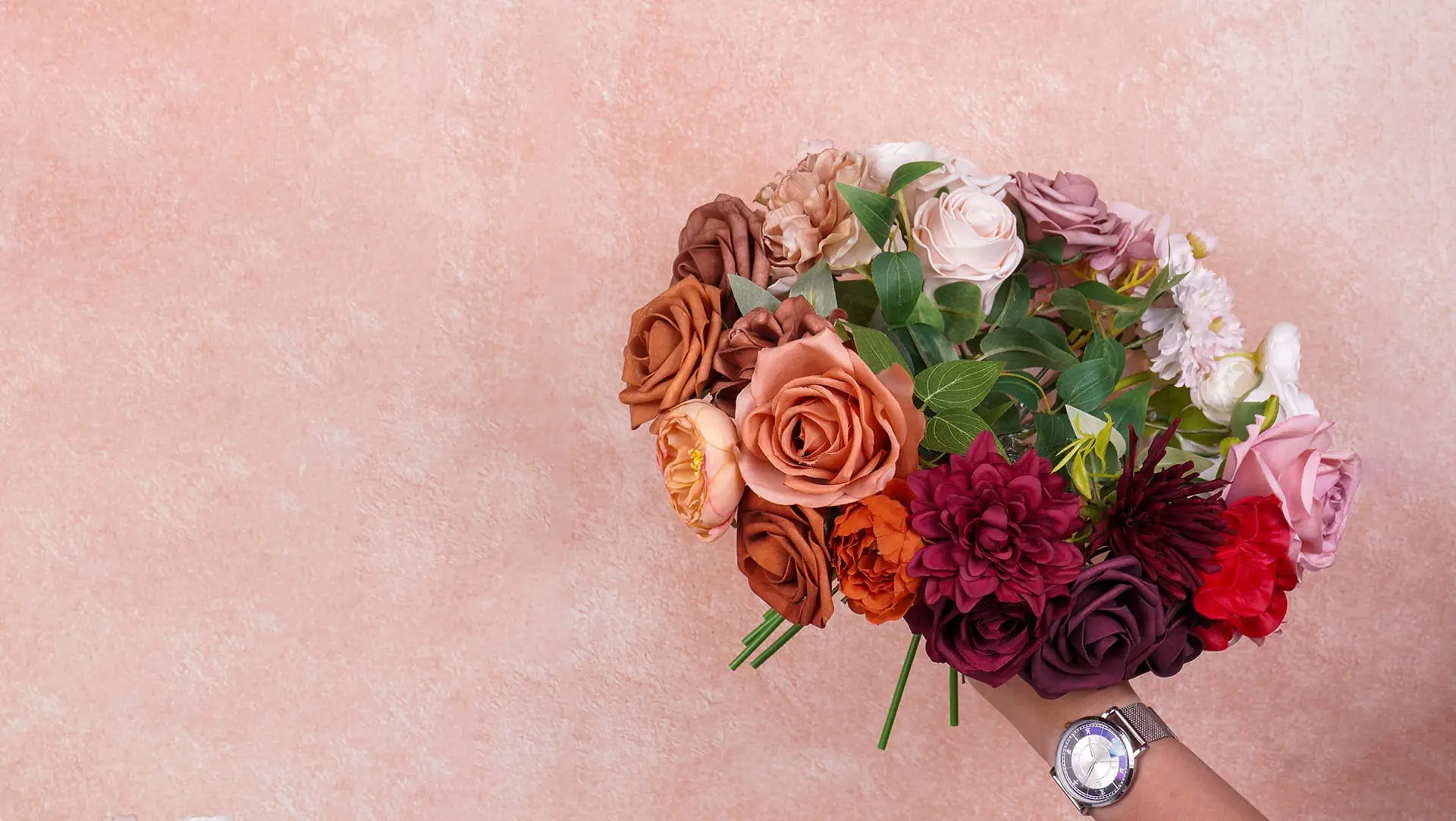
A fall wedding color palette is a set of three to six coordinated shades — usually one warm lead color, one softening tone, one deep anchor and a neutral — that repeats across the bouquets, tables, bridesmaid dresses and stationery of an autumn wedding. For 2026, the lead color most couples are reaching for is muted terracotta: the sun-faded, slightly dusty version of burnt orange rather than the bright pumpkin shade of a few years ago.
This guide walks through four fall wedding color palettes built around that trend, gives you the hex codes for each shade, and shows which faux flowers carry every color — so you can plan the palette once and keep the flowers long after the day.
What are the fall wedding colors for 2026?
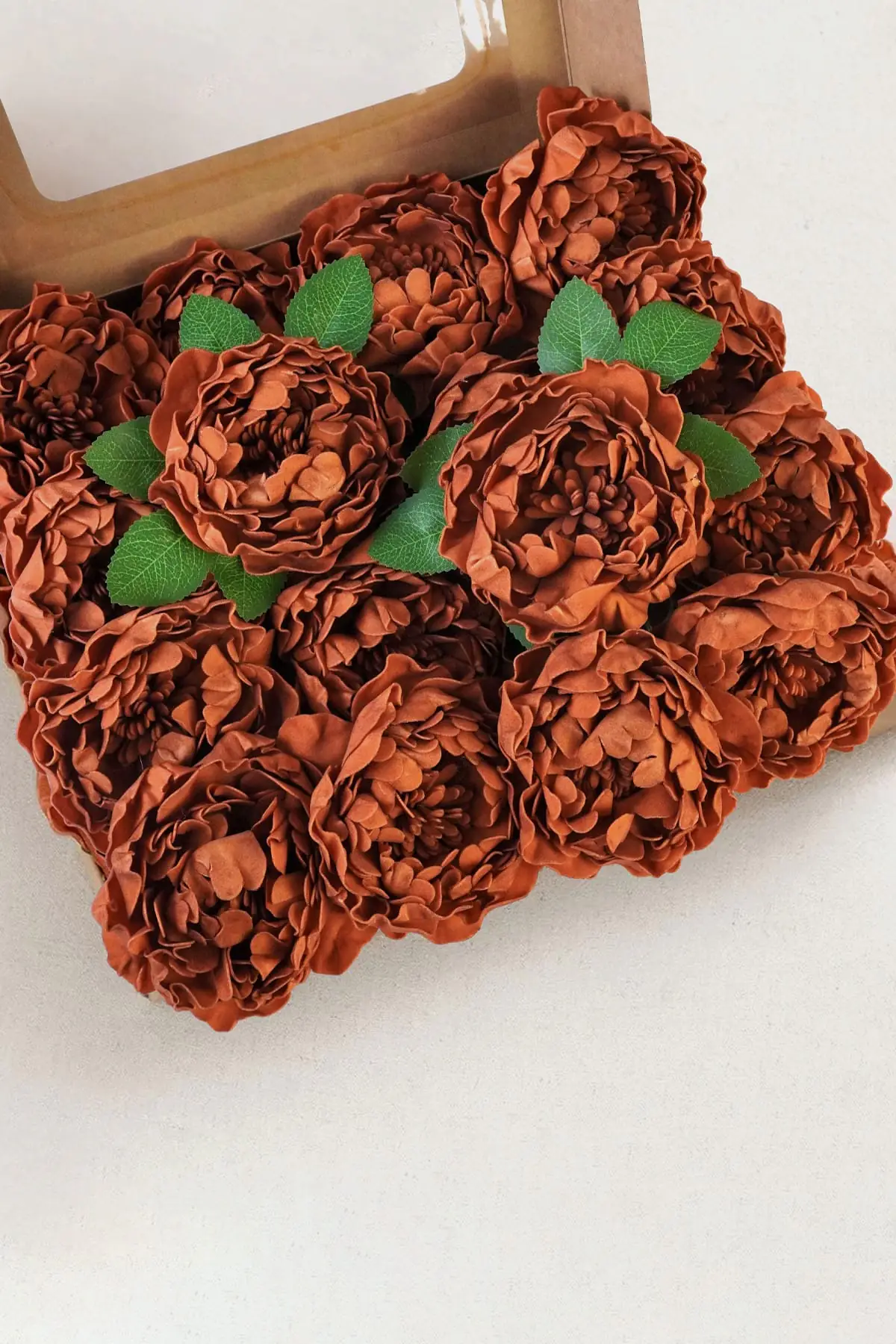
The defining fall wedding colors for 2026 are muted terracotta, dusty or "muted" rose, espresso brown and deep navy, usually softened with ivory or champagne. Pinterest's Wedding Trends Report 2026 recorded searches for "muted terracotta" up 545% and "muted rose" up 345%, which tells you the direction clearly: warm and earthy, but washed-out rather than saturated.
In practice that means three things for your flowers:
- Choose clay, rust and sandy tones over bright orange. A terracotta bouquet should look like a desert at dusk, not a Halloween display.
- Soften warm colors with pink, not with more orange. Dusty rose bridges terracotta and ivory better than peach does.
- Anchor the palette with one deep color. Navy or espresso brown gives the eye somewhere to rest and makes the warm shades look richer.
Below are the four palettes we'd build from those rules. Every hex code comes from the actual flowers in our Shop by Color collection, so what you see on screen is what arrives in the box.
#C1552B
Muted Terracotta
Warm lead color
#883D2A
Burnt Peony
Deep warm accent
#AB7174
Dusty Rose
Softening tone
#F6BEBB
Soft Blush
Light highlight
#743E2E
Espresso Brown
Earthy anchor
#1F293E
Deep Navy
Cool contrast anchor
Palette 1: Muted Terracotta + Champagne (the sunset gradient)
Best for: golden-hour ceremonies, desert or vineyard venues, couples who want warm without "boho."
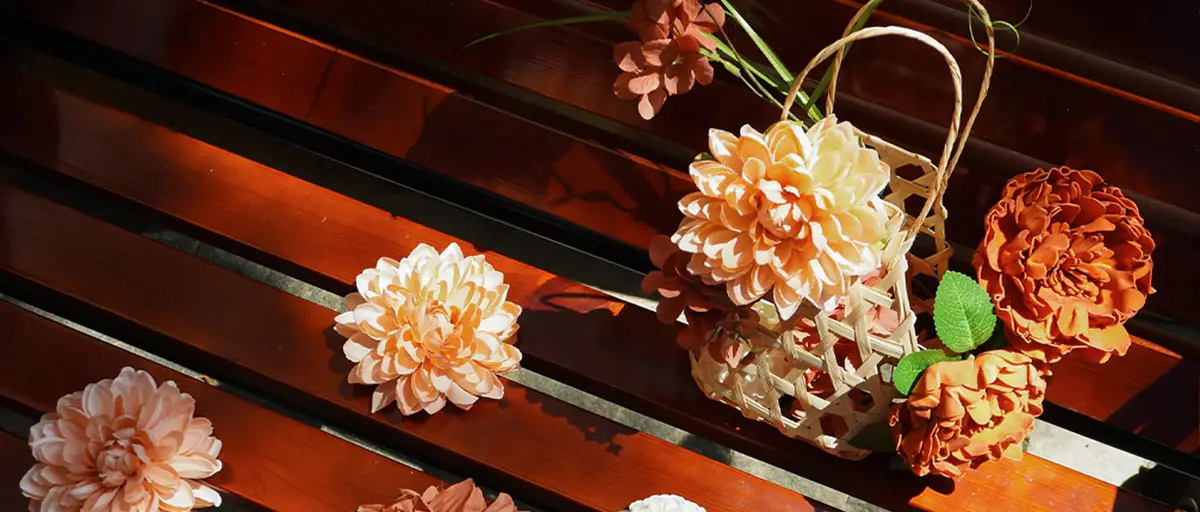
The secret to a terracotta palette that looks high-end is a gradient, not a single orange. Start with ivory and champagne for light, move through toffee and caramel, and finish with deep rust. The eye reads the whole range as one sunset.
Faux flowers that carry it:
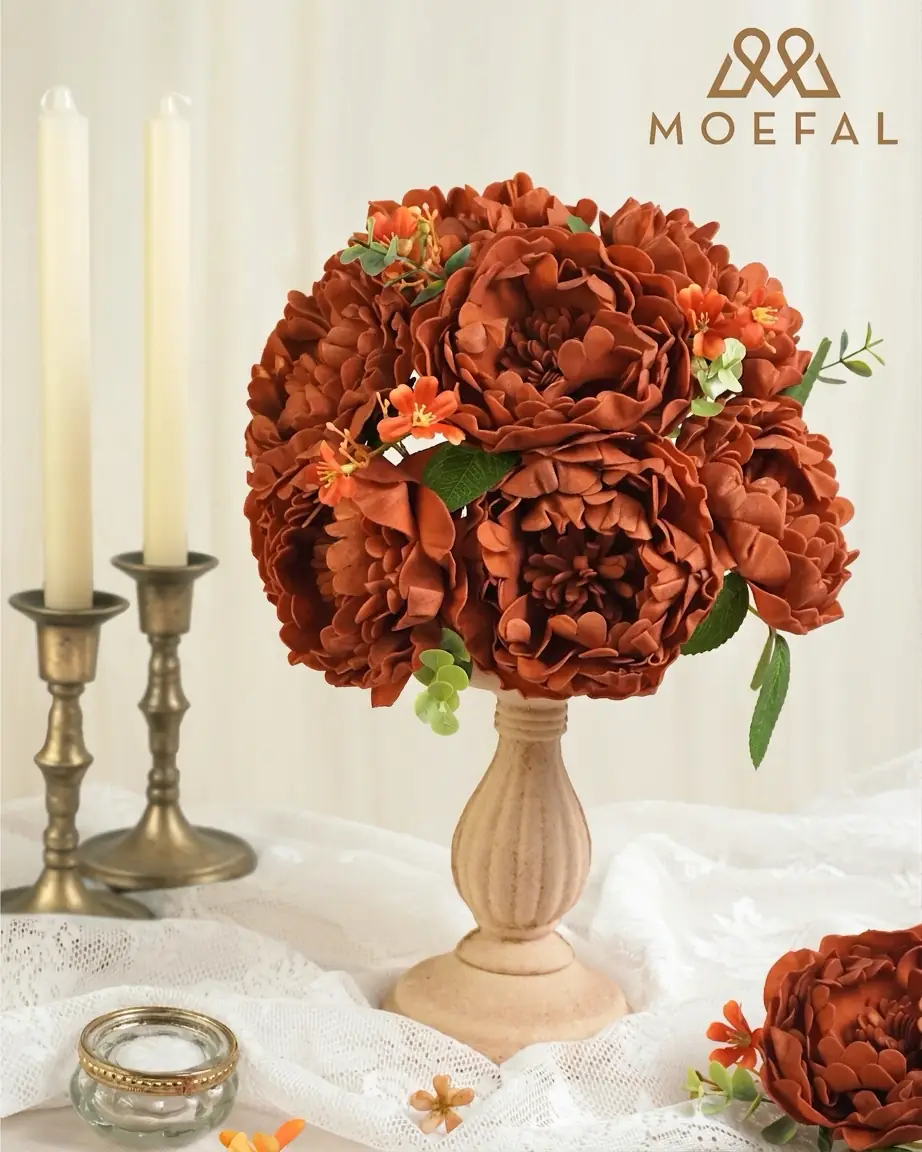
- Lead: terracotta peonies with vintage burnt edges — 4-inch blooms that give a bouquet its weight.
- Focal accent: sunset terracotta silk dahlias, mixing 5.5-inch semi-cactus and 4.5-inch waterlily blooms.
- Filler: the amber and terracotta flower box, already matched from mini peonies to caramel roses.
We've written a deeper guide to this gradient in Sunset Elegance: Terracotta & Champagne. For the five individual shades and their hex codes, see 5 Shades of a Desert Sunset.
Palette 2: Terracotta + Dusty Rose (warm but soft)
Best for: garden and barn weddings, brides who love pink but want it to feel autumnal.
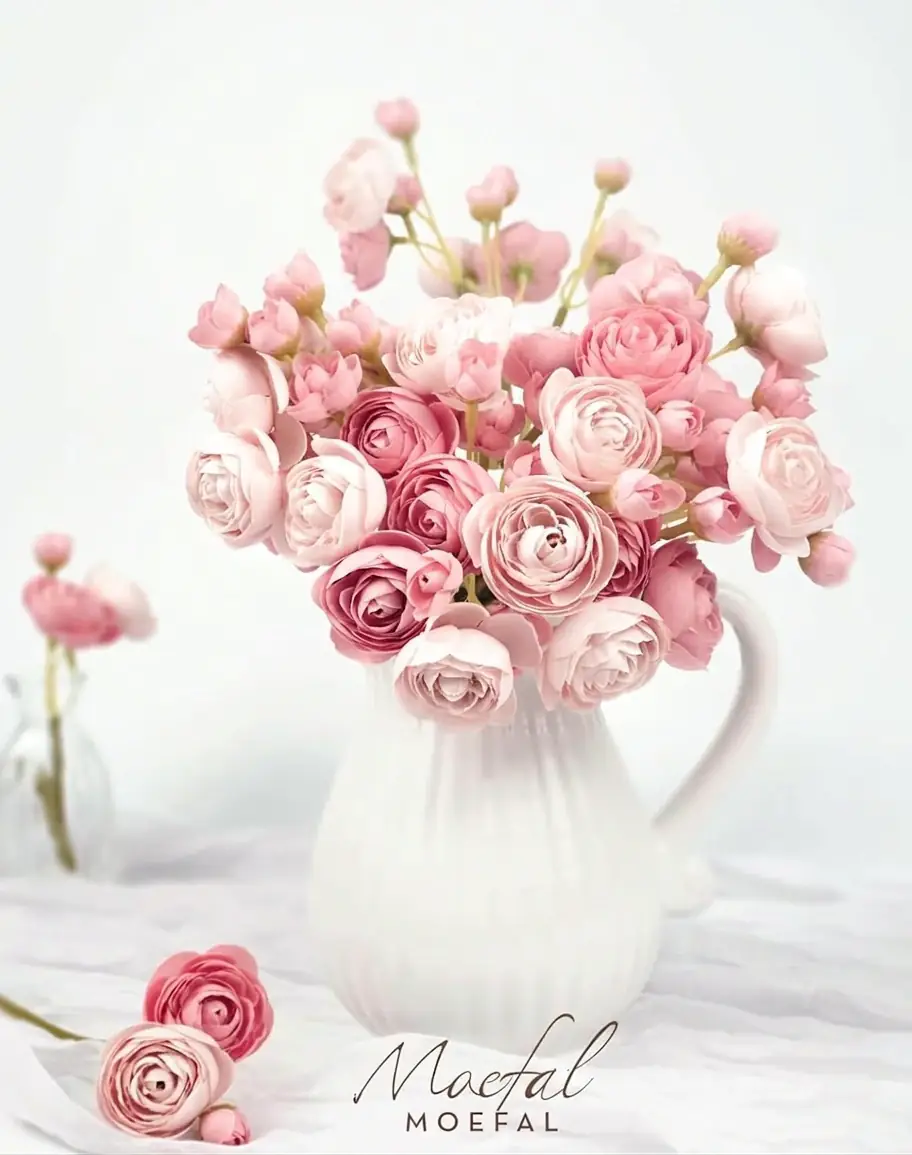
Dusty rose is the most flattering partner for terracotta because it shares the same muted, slightly gray undertone. Put them side by side and the orange looks warmer and the pink looks more grown-up. Keep the ratio roughly two parts terracotta to one part dusty rose, and add ivory so the bouquet doesn't turn muddy.
Faux flowers that carry it:
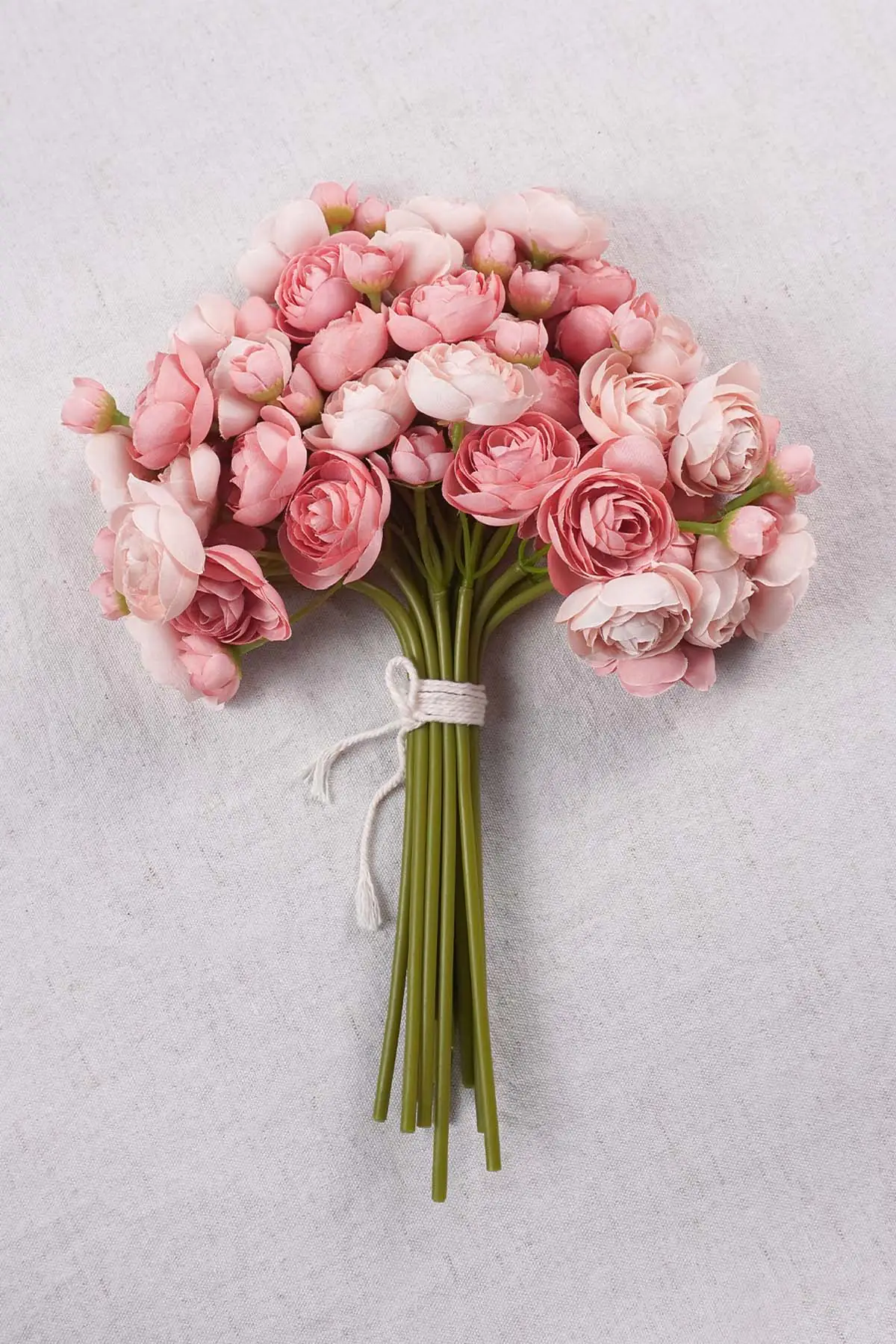
- Softening tone: dusty rose ranunculus — 18 silk stems in a gradient from rose to cream, ideal as filler around larger blooms.
- For the groom's side: the dusty rose boutonniere set (one groom design plus five groomsmen pieces) or the terracotta boutonniere set with gold detail.
- Browse the full Blush & Dusty Rose family.
For styling ideas, see The Dusty Rose Dream: How to Style a Vintage Garden Wedding.
Palette 3: Terracotta + Navy (the contrast palette)
Best for: evening receptions, city venues, and weddings where the groomsmen wear navy suits.
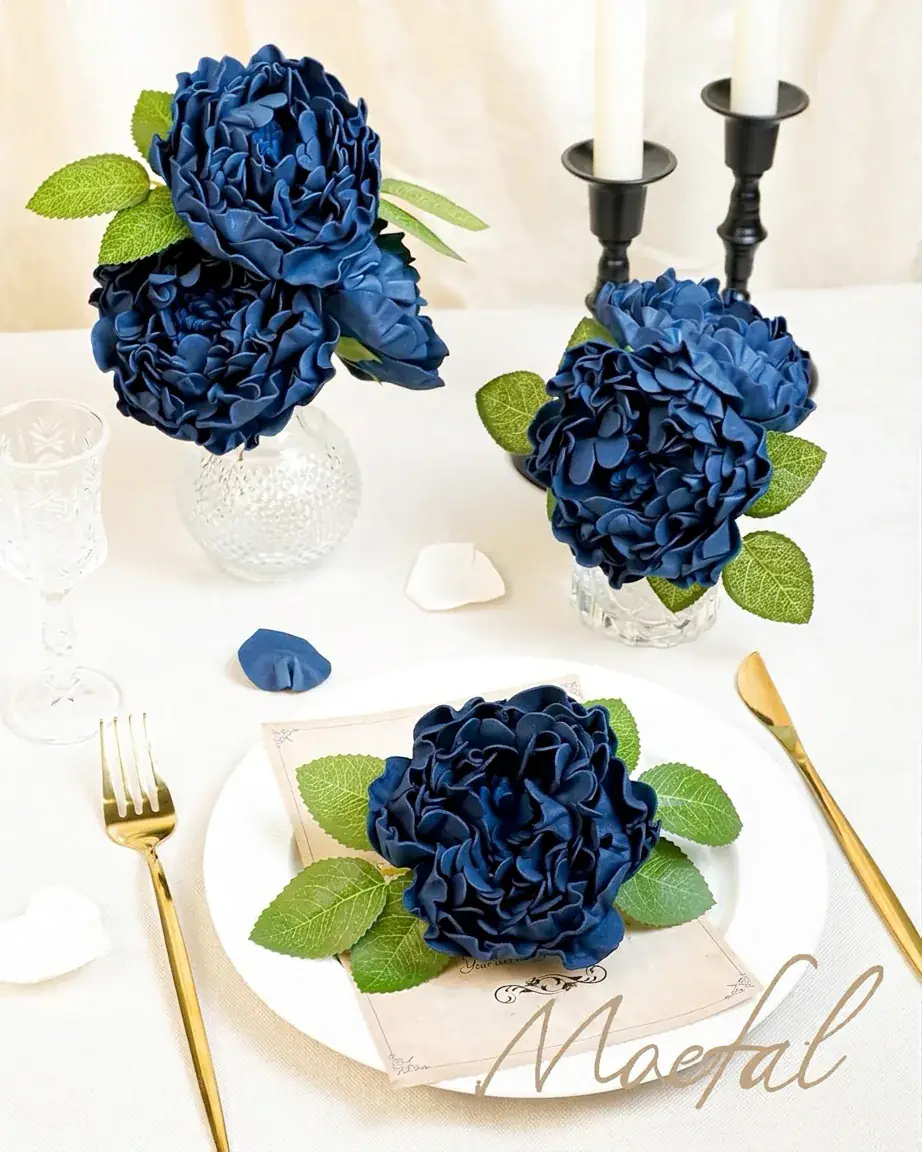
Navy is the classic cool anchor for a warm fall palette. Blue and orange sit opposite each other on the color wheel, so a little navy makes terracotta glow — and a little terracotta keeps navy from feeling wintry. The trick is proportion: use navy as roughly one flower in five, or as a single bloom on each place setting, rather than splitting the palette half and half.
Faux flowers that carry it:
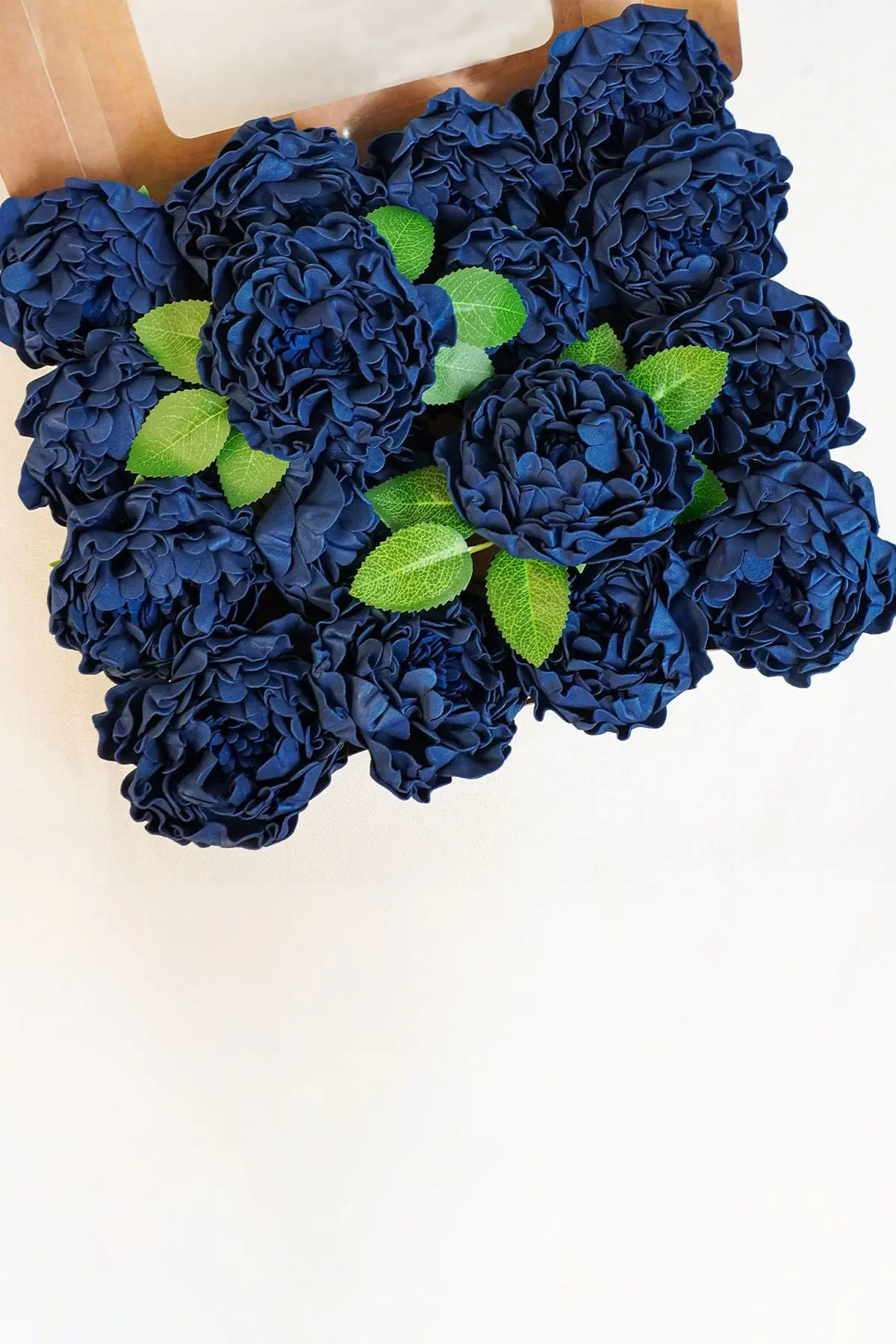
- Navy blue peonies with the same hand-finished burnt edges as the terracotta version, so the two sit together naturally.
- Navy blue dahlias — 25 stems with 2.7-inch blooms, the right size for boutonnieres and bouquet accents.
- The navy blue flower box of foam roses and peonies for building volume.
- The whole Navy & Dusty Blue family.
Deep blue is genuinely hard to find in fresh flowers, which is one reason faux navy blooms are so popular. More on that in Navy Blue Wedding Flowers: Something Bold.
Palette 4: Espresso Brown + Cream (the earthy palette)
Best for: rustic and woodland weddings, intimate dinners, and couples who want a quieter, more neutral fall look.
Espresso and mocha browns show up in most 2026 fall palette roundups, and brown is the easiest way to make a fall wedding feel grounded rather than loud. Espresso and coffee tones paired with cream, caramel and tawny beige look warm in candlelight and photograph beautifully against wood and linen.
Faux flowers that carry it:
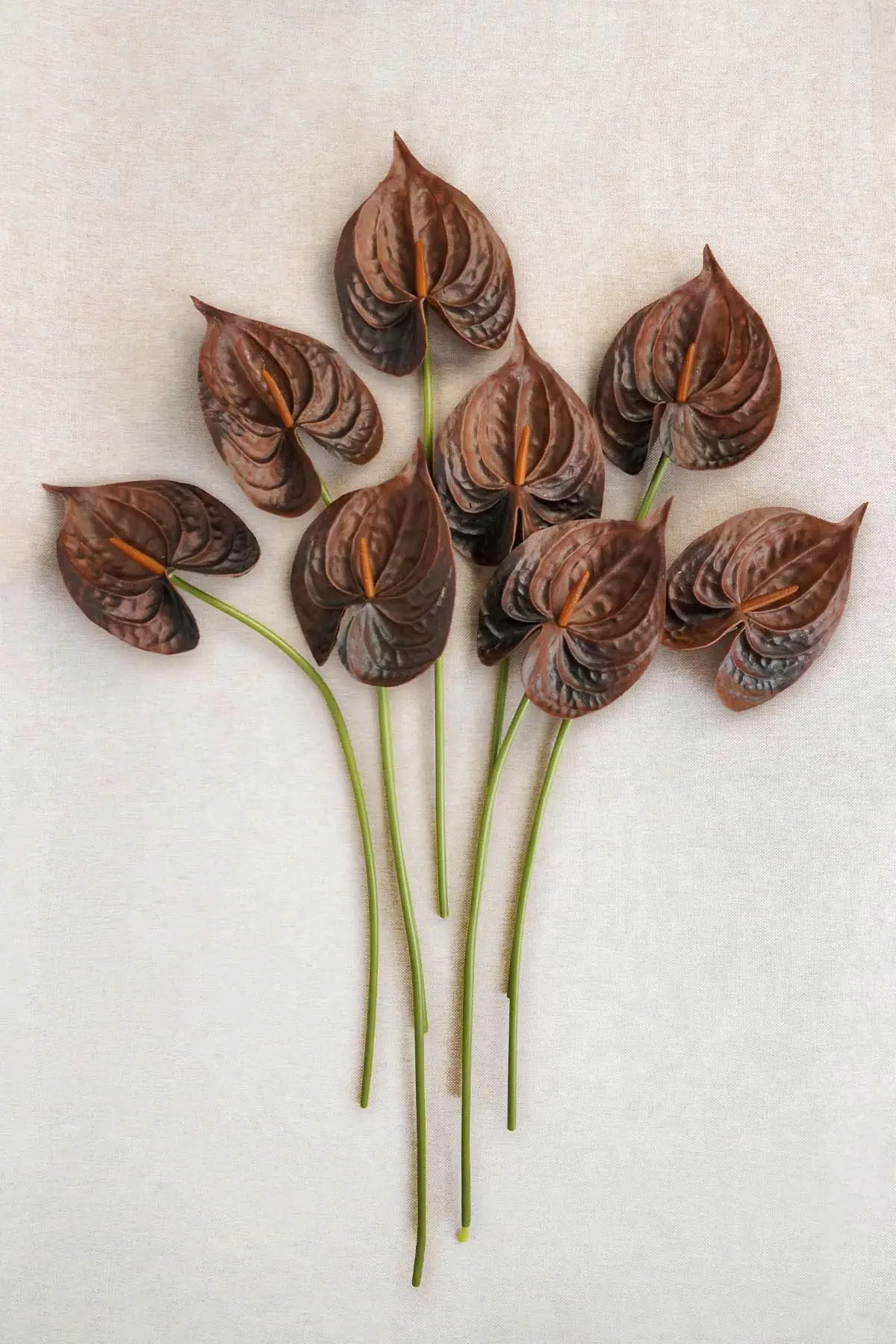
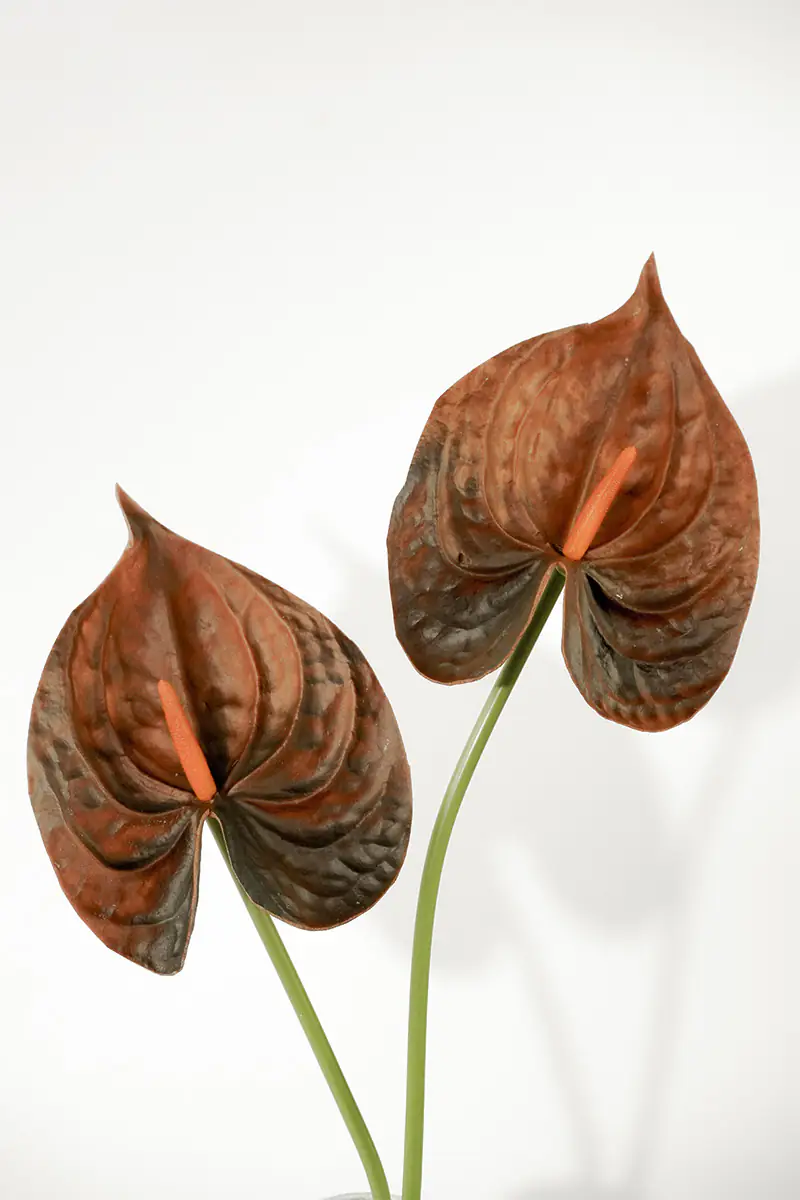
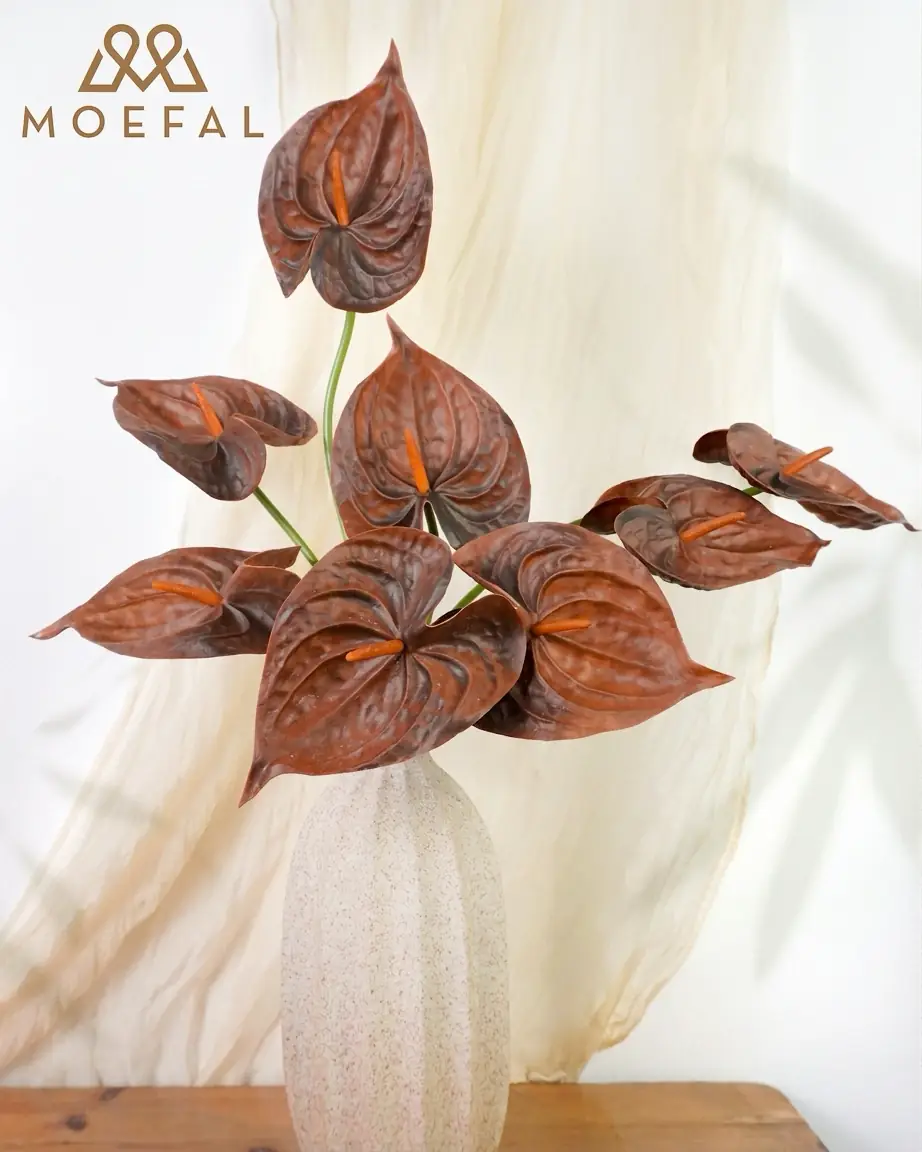
- Brown anthurium — 17-inch real-touch stems with sculptural 4 x 5.5-inch blooms; two or three stems give a bouquet a modern outline.
- The earth brown hydrangea flower box, 31 pieces led by caramel silk hydrangeas.
- The tawny beige daisy flower box for a lighter, more delicate neutral.
- Browse Earth & Tawny.
Want a pop of warmth? Add a few terracotta anthurium stems — orange against espresso is one of the most striking combinations of the season.
How to build a fall bouquet from one palette
Once you have a palette, a simple ratio keeps every arrangement consistent — from the bridal bouquet to the smallest bud vase:
- Hero flowers (about 50%) — your lead color in the largest blooms. For most fall palettes, that's peonies or dahlias.
- Supporting flowers (about 30%) — the softening tone in smaller or filler blooms, such as ranunculus.
- Accent (about 10–20%) — the anchor color, used sparingly so it stays special: one navy peony, two brown anthurium stems.
- Neutral — ivory, cream or greenery to give the eye room to rest.
Build darker flowers toward the center and lighter ones at the edge, turning the bouquet as you go. If your flowers arrived packed flat, fluff them first — our guide on how to fluff an artificial bouquet after delivery covers the steps.
One practical note: burnt-edge peonies and foam dahlias have short, bendable wire stems (about 8 inches), so they suit bouquets, low bowls and compotes better than tall vases. Anthurium's long 17-inch stems are the ones to use for height.
From the wedding to the Thanksgiving table
A fall wedding in October sits only a few weeks before Thanksgiving, and a palette of terracotta, rust and brown is already a harvest palette. That's one of the quiet advantages of faux flowers: the centerpieces from your reception can go straight onto the holiday table in November, then back into the box until next year.
A low bowl of terracotta peonies between two taper candles, a few loose blooms on the napkins, and a scattering of small pumpkins is all a Thanksgiving table needs. For more table ideas, see Table Centerpiece Flowers for Elegant Dinners or shop everything tagged Fall Wedding.
How to choose the right shade of terracotta
"Terracotta" covers a wide range, and the same flower can read very differently depending on light and what surrounds it. A few tips:
- Check colors in daylight. Warm indoor bulbs push terracotta toward red. Look at your flowers — and your dress and linen swatches — by a window in the morning.
- Match undertones, not names. A "rust" bridesmaid dress and a "rust" flower from different makers rarely match exactly. Hold the fabric swatch next to the bloom before you commit.
- Use hex codes with your vendors. Sending your stationer or cake designer the hex codes above is faster and more precise than describing colors in words.
- Test the palette in a photo. Arrange one of each flower on a neutral cloth and take a phone photo. If one color disappears or dominates, adjust the ratio before you buy in bulk.
Our terracotta wedding color palette guide breaks the gradient into five shades with the flowers that carry each one.
Frequently asked questions
What colors go with terracotta for a fall wedding?
Terracotta pairs best with dusty rose (to soften it), navy or espresso brown (to anchor it), and ivory or champagne (to lighten it). Sage green also works for a more garden-style look.
Is navy a fall wedding color?
Yes. Navy is one of the most reliable fall wedding colors because it provides a cool contrast to warm autumn tones like terracotta, rust and burnt orange, and it matches the navy suits many grooms already wear.
What is muted terracotta?
Muted terracotta is a softer, slightly grayed version of terracotta — closer to sun-faded clay than bright orange. It was one of the fastest-rising wedding color searches in Pinterest's 2026 trends report.
Are faux flowers a good choice for a fall wedding?
Faux flowers are a practical choice for fall because they don't wilt in warm early-autumn weather, deep shades like navy and espresso brown are easier to find than in fresh flowers, and the arrangements can be reused for Thanksgiving and holiday decor afterward.
Shop the story
One flower from each of the four palettes in this guide.