The short answer: navy blue wedding flowers look best as the deep anchor of a palette, not the whole of it. Use navy for about a quarter to a third of the flowers and surround it with something light — white, ivory, dusty blue or blush — so it does not turn black in evening photos. Because true navy barely exists in nature and fresh blue flowers are often dyed, artificial navy peonies and dahlias are the most reliable way to get a deep, even blue.
Something borrowed, something… navy blue? While weddings often lean into pastels, navy brings a grounding, sophisticated depth that pairs beautifully with crisp whites and touches of gold.
Why navy flowers are hard to find fresh
Blue is one of the rarest flower colors in nature, and a deep, inky navy is rarer still. Most navy flowers you see at a florist have been dyed or sprayed, and the color can be uneven from stem to stem, or rub off on hands and fabric. That makes navy one of the clearest cases for artificial flowers: the color is in the material itself, so every stem matches.
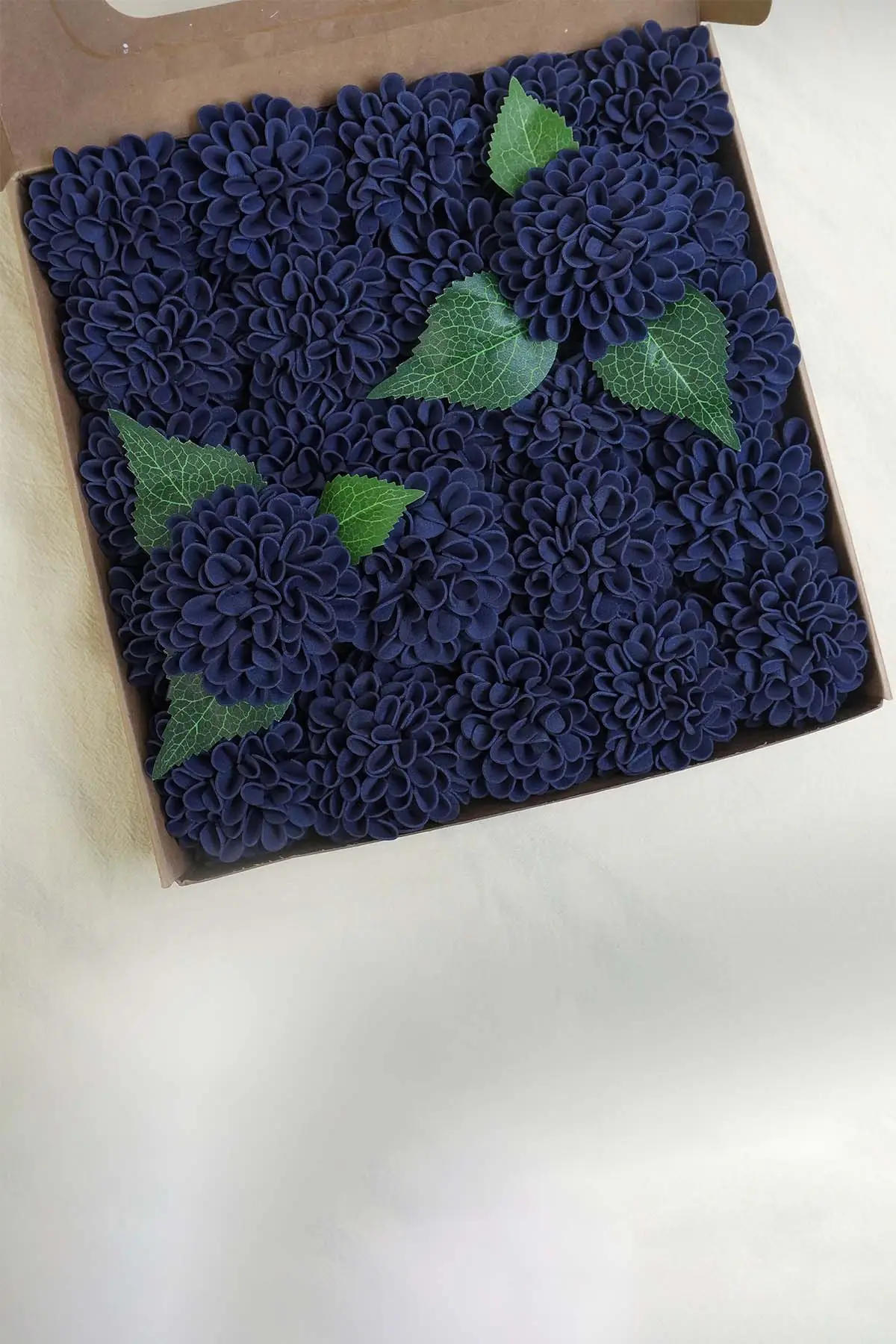
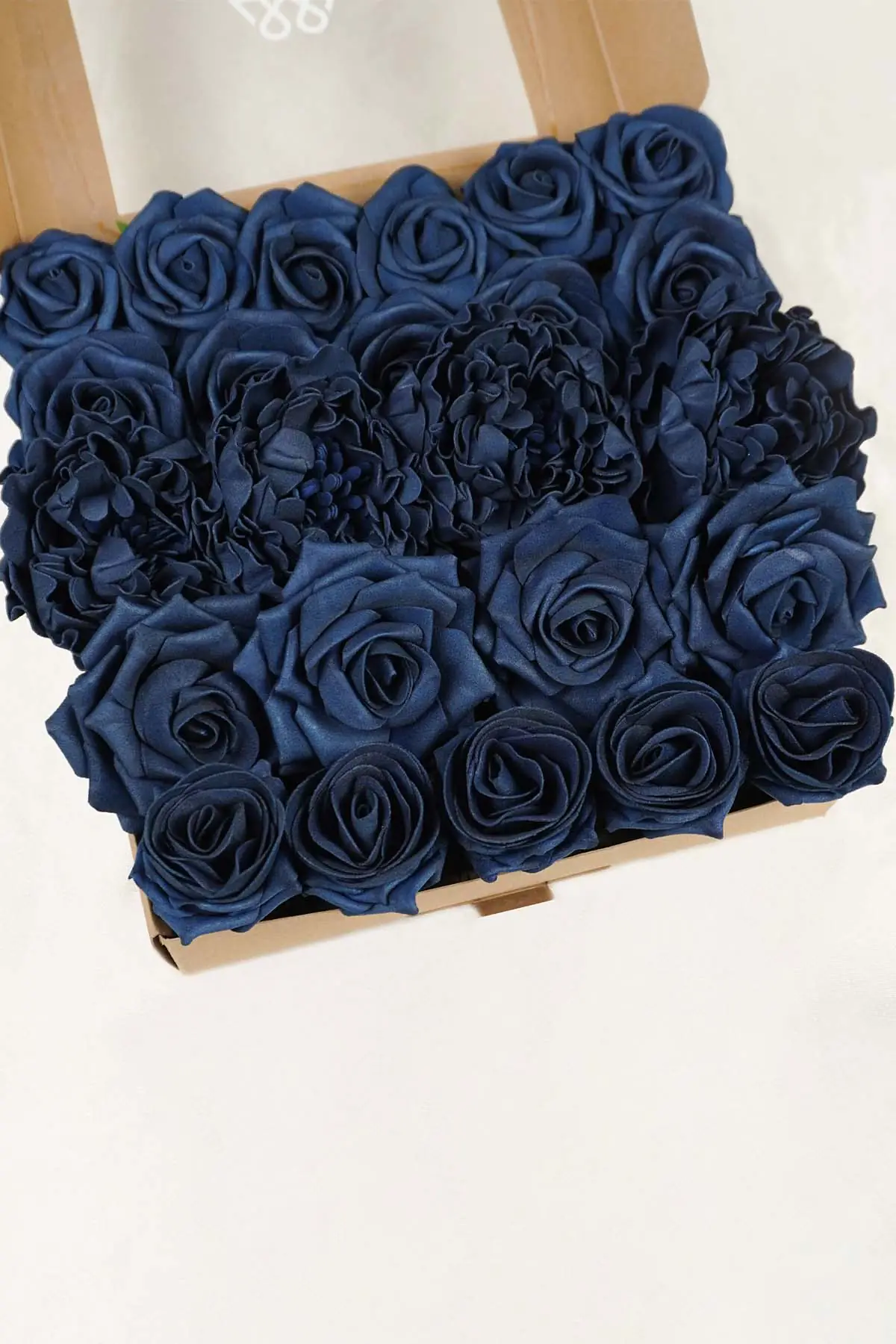
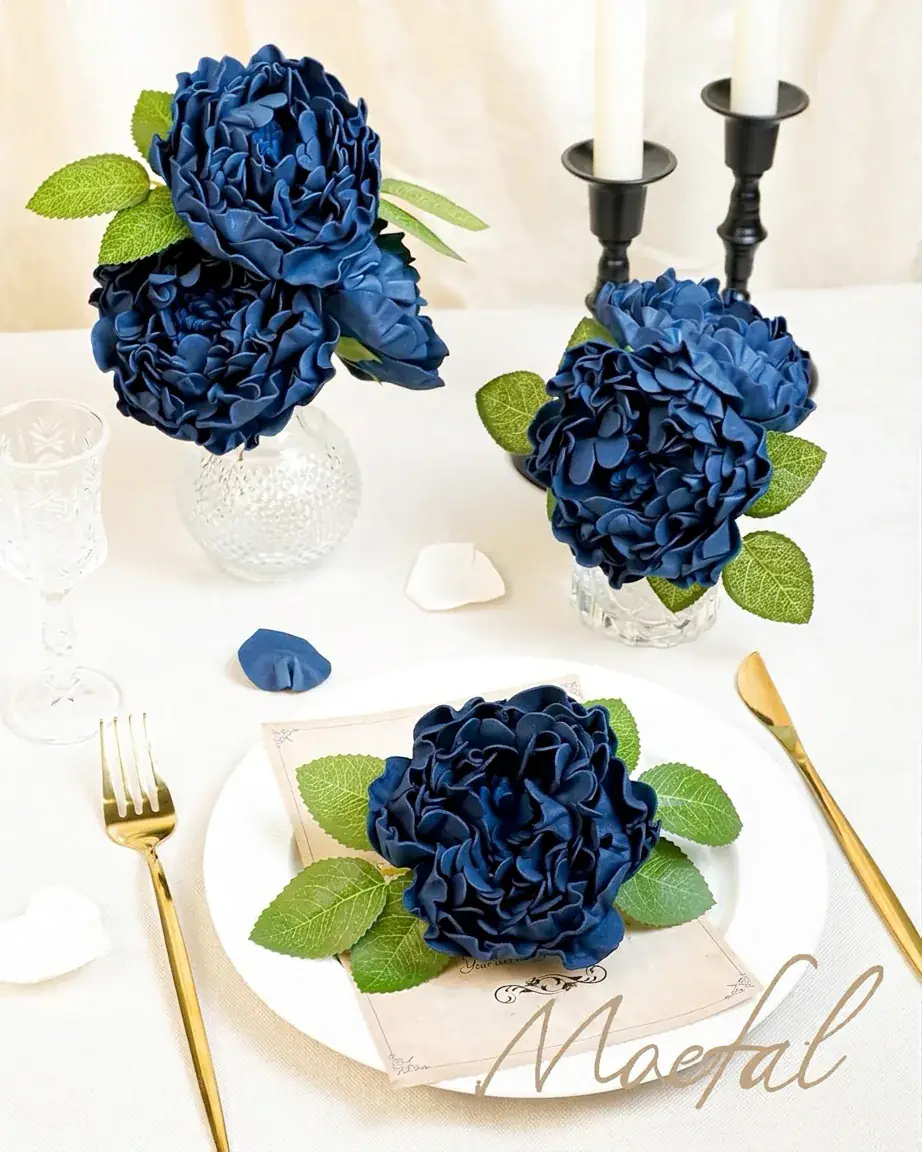
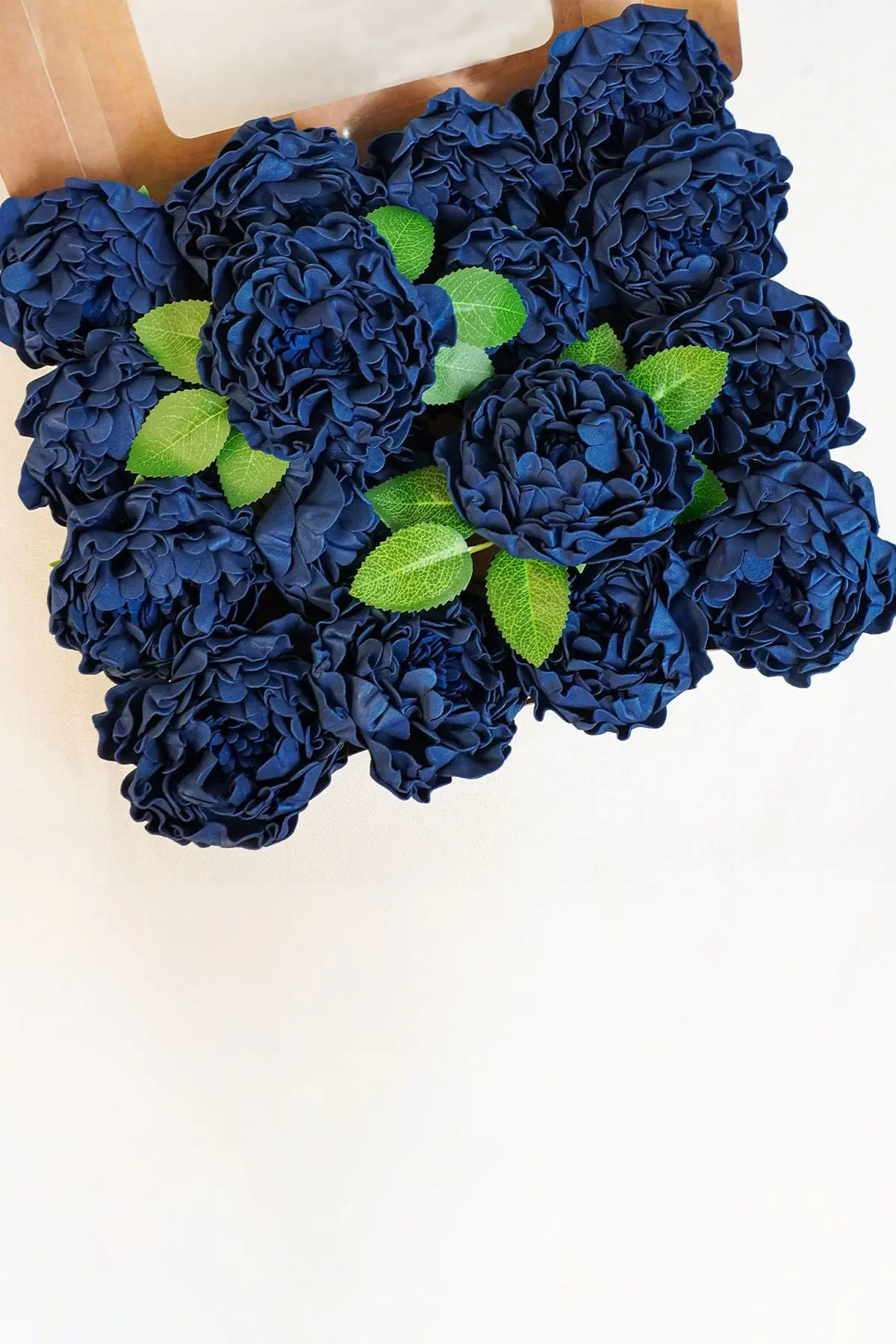
Our navy flowers are made in soft foam with a matte finish. Navy peonies have a darker burnt edge on each petal, the way a real peony bruises as it opens, so the bloom has depth instead of one flat color. Navy dahlias are about 2.7 inches across, and our navy flower box is a velvety blue that reads deep navy in daylight and near-black under candlelight. One customer called the peonies "pretty and easy to work with."
Five navy color pairings that work
- Navy and white or ivory — the classic. Crisp, nautical in summer, formal in winter. Ivory is softer than pure white and flatters skin tones in photos.
- Navy and dusty blue — a tonal palette. Dusty blue is a muted grey-blue, so it bridges navy and white without adding a new color.
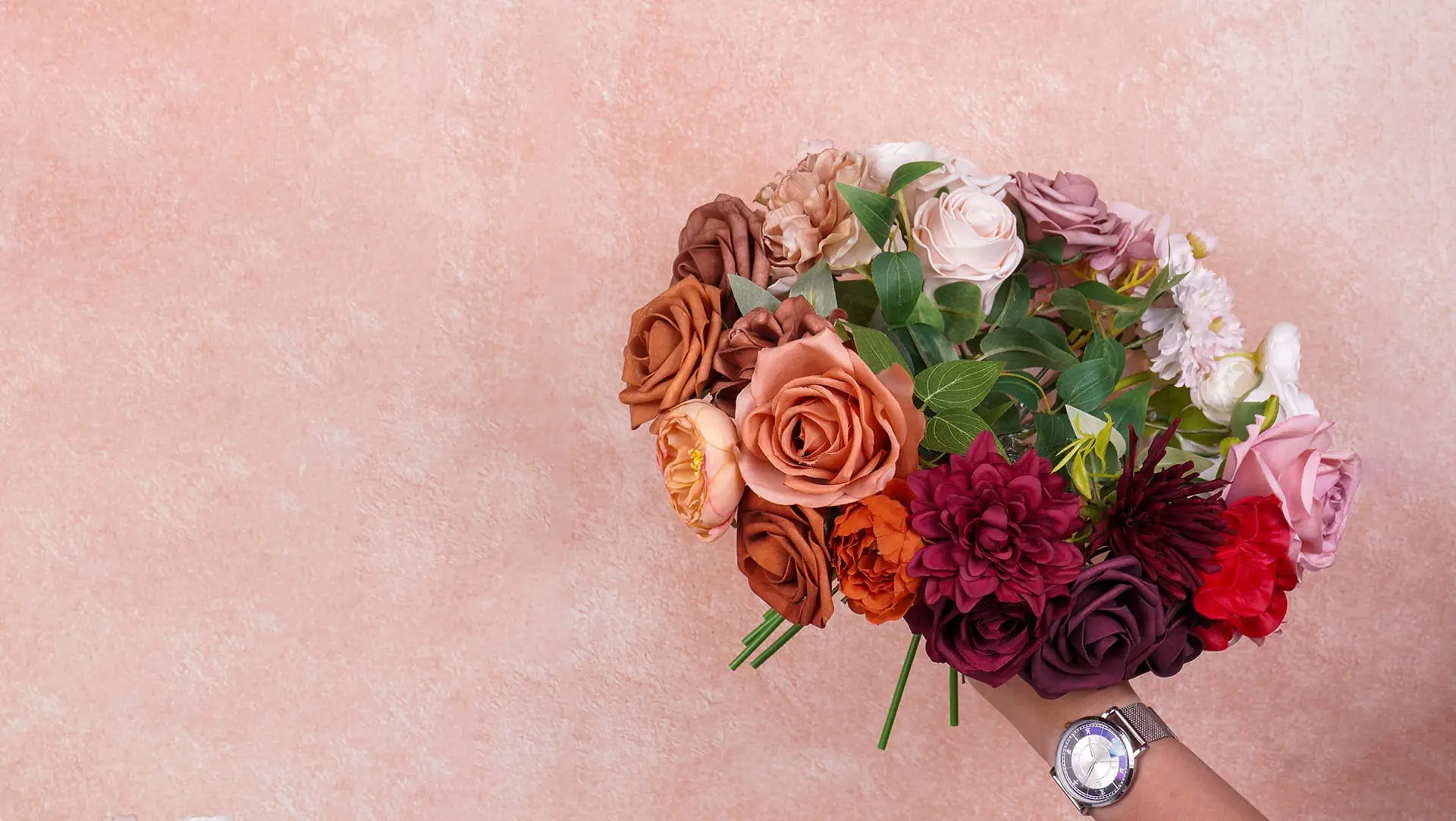
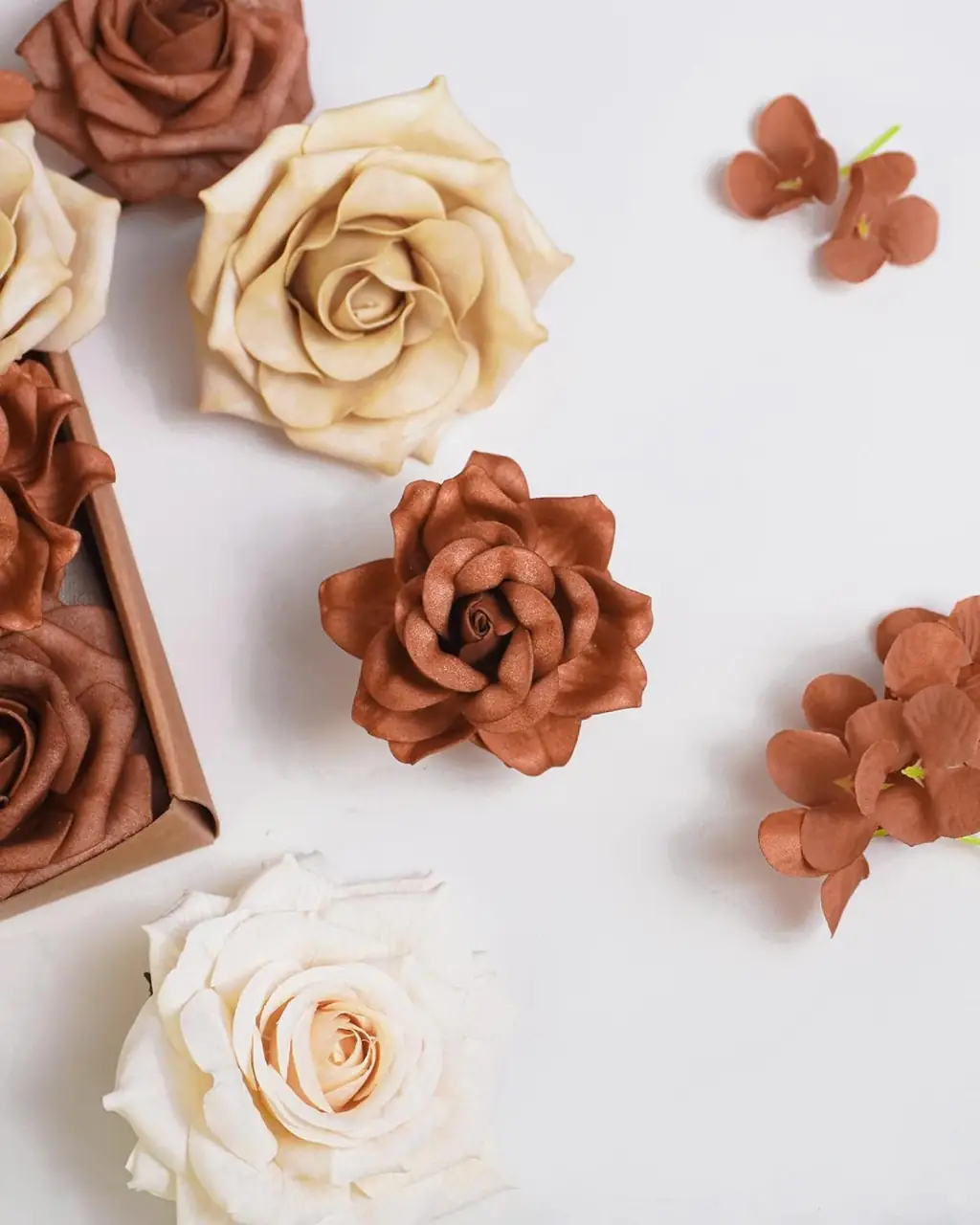
- Navy and terracotta or rust — the fall contrast palette. Warm and cool together look rich in October light; see our fall wedding color palettes.
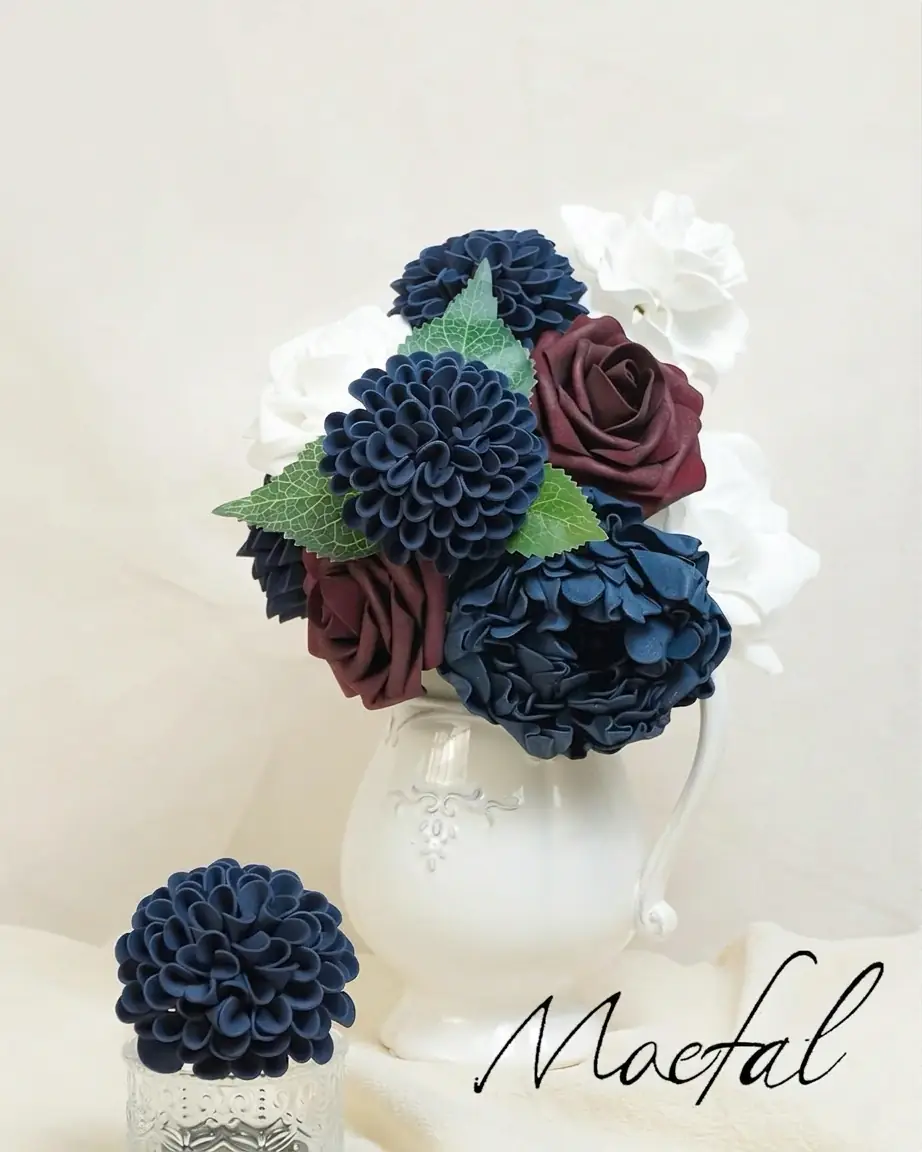
- Navy and burgundy — a moody winter palette for evening receptions and velvet linens.
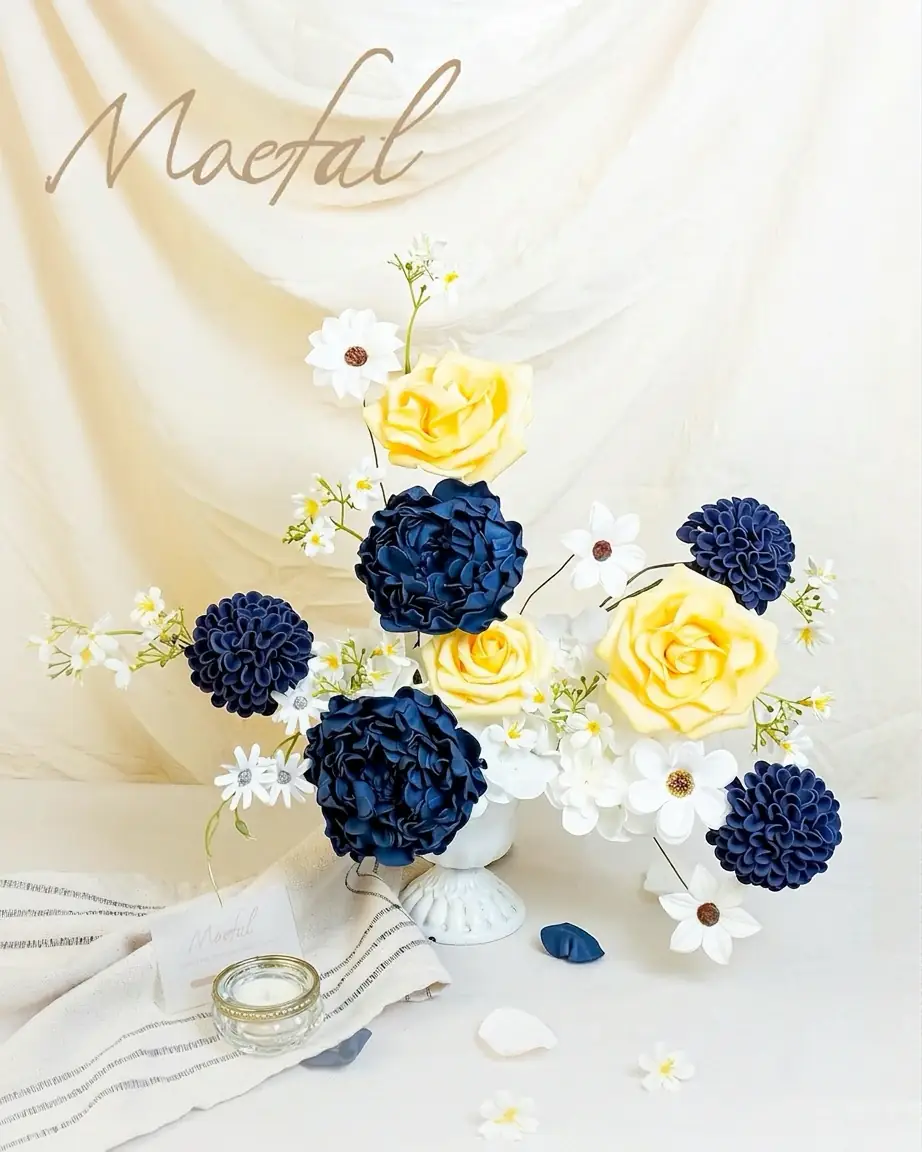
- Navy and soft yellow or blush — a lighter spring version, where navy grounds pastels that might otherwise look sugary.
Gold — in candlesticks, cutlery or stationery — works with every one of these and stops navy from looking heavy.
Proportions: how much navy is enough?
Navy is a strong color, so a little goes a long way. A simple split keeps it balanced:
- About 25–35% navy — the deep blooms at the center of bouquets and centerpieces.
- About 50–60% light — white, ivory or dusty blue flowers around them.
- About 10–15% accent and greenery — leaves, plus a touch of gold or a contrast color such as rust or burgundy.
Check your venue lighting. Under warm candlelight, navy looks almost black; if your reception is in the evening, push the light flowers higher and keep navy toward the center so the shape still reads in photos.
Where to use navy at a wedding
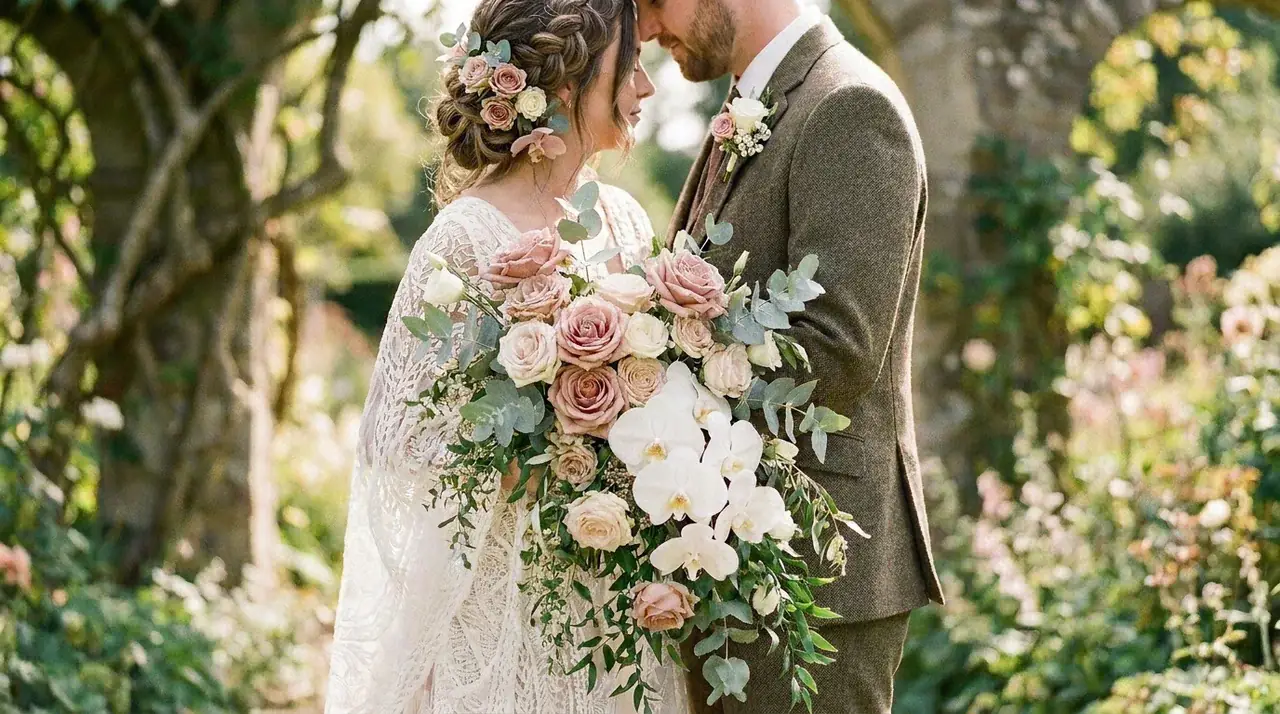
- Bridal bouquet: a few navy peonies at the heart of a white or dusty blue bouquet — your something blue, built in.
- Groomsmen boutonnieres: a small navy bloom on a grey or tan suit picks up the bridal flowers.
- Ceremony arch: clusters of navy and white at the corners frame the couple without overwhelming the photos.
- Centerpieces: navy dahlias in a low bowl with white filler, on an ivory or navy linen.
For centerpiece heights and stem counts, see our guide to wedding table centerpiece flowers.
Navy through the seasons
- Spring: navy with blush, soft yellow and plenty of white. Spring weddings usually lean into pastels; a little navy keeps them from looking sugary.
- Summer: navy and crisp white for coastal and garden weddings, with dusty blue to soften the contrast in bright sun.
- Fall: navy with terracotta, rust and cream. The warm and cool contrast is what makes this one of the most photographed fall palettes.
- Winter: navy with burgundy, ivory and gold for candlelit evening receptions.
Linens, attire and stationery in a navy palette
Flowers carry a palette only so far; the rest of the room has to agree. A few choices make navy look intentional:
- Linens: an ivory tablecloth with navy napkins keeps tables light; a navy velvet cloth with white flowers is the dramatic version for winter.
- Suits and dresses: navy suits for the groom's side with ivory or dusty blue bridesmaid dresses tie the wedding party to the flowers.
- Stationery: navy envelopes with white or gold ink set the tone from the invitation onward.
- Metals: gold or brass rather than silver; silver can make navy look cold under artificial light.
The navy and dusty blue flowers in our shop
Everything below sits in our navy and dusty blue color family, so the shades are designed to match:
- Navy blue peonies — 16 stems, about 4-inch blooms with a burnt edge. The statement flower for bouquets and centerpieces.
- Navy blue dahlias — 25 foam stems with 2.7-inch heads; one box goes further than you would expect.
- Navy blue flower box — 24 pieces in a deep, saturated navy for one bouquet or one centerpiece.
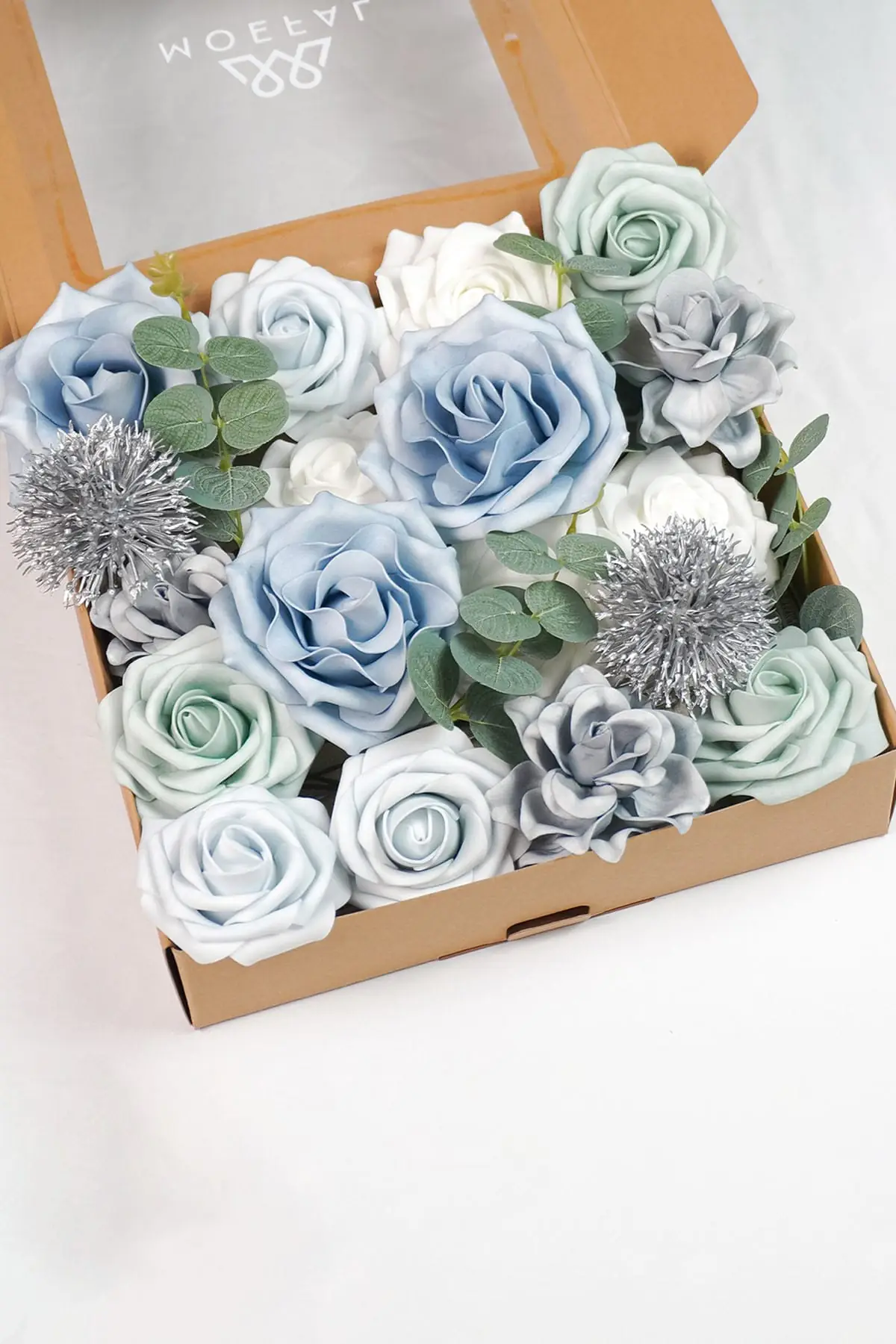
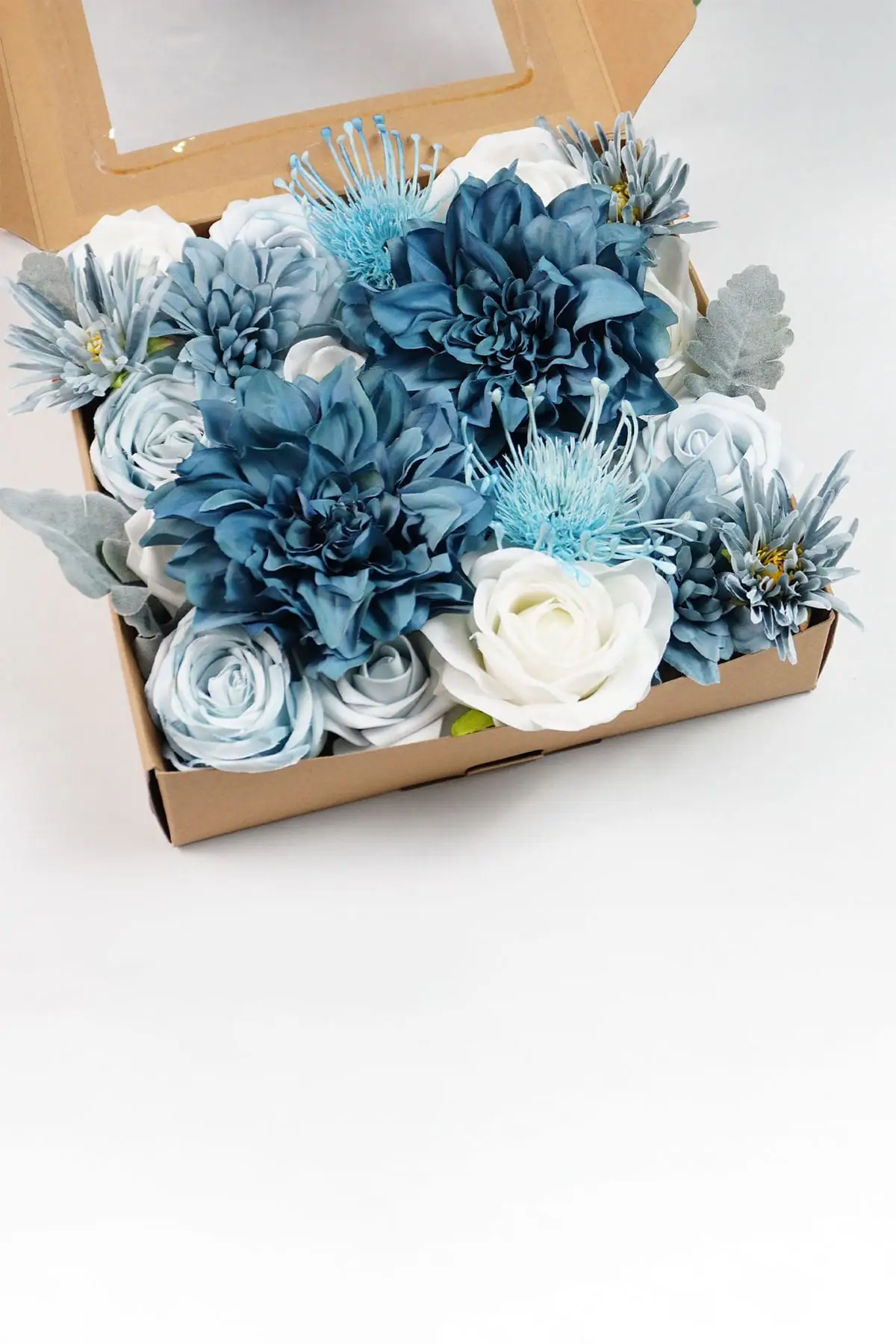
- Dusty blue and navy box — 20 pieces pairing muted dusty blue with deep navy, the hardest two shades to match when bought separately.
- Dusty blue and white box — 32 pieces, eucalyptus included; our largest box.
- Dusty blue and ivory box — 23 pieces in a muted modern blue with warm off-white.
A customer who styled the dusty blue and navy box at home described "a beautiful mix of dusty blue, navy, and white blooms that look so elegant together," and another said that with the dusty blue and white box, "several people have already thought they were real at first glance."
How many navy flowers do you need?
Each box or pack in our planning guide makes one bridal bouquet or one centerpiece, with about half a pack for a bridesmaid posy. If navy is your accent rather than the main color, one box of navy peonies or dahlias is usually enough to add to two or three bouquets or centerpieces in white or dusty blue.
Frequently asked questions
What colors go with navy blue for a wedding?
White and ivory are the classic partners. Dusty blue gives a tonal look, terracotta or rust a warm fall contrast, burgundy a moody winter palette, and soft yellow or blush a lighter spring version. Gold accents work with all of them.
Are there real navy blue flowers?
Very few. True navy is extremely rare in nature, so most navy fresh flowers are dyed or sprayed, which can look uneven. Artificial navy flowers hold an even color on every stem.
Is navy a good color for a fall wedding?
Yes. Navy is one of the most reliable fall colors, especially paired with terracotta, rust or burgundy. It adds depth to warm palettes and looks rich in low autumn light.
How much navy should I use in wedding flowers?
About a quarter to a third of the flowers. Keep navy at the center of arrangements and surround it with lighter blooms so the shape still shows in evening photos.
Can navy flowers be my something blue?
Yes. A few navy peonies or dahlias at the heart of the bridal bouquet, or a navy bloom in the groom's boutonniere, is an easy way to include something blue.
Shop the story
Navy and dusty blue flowers from this guide, designed in one color family.