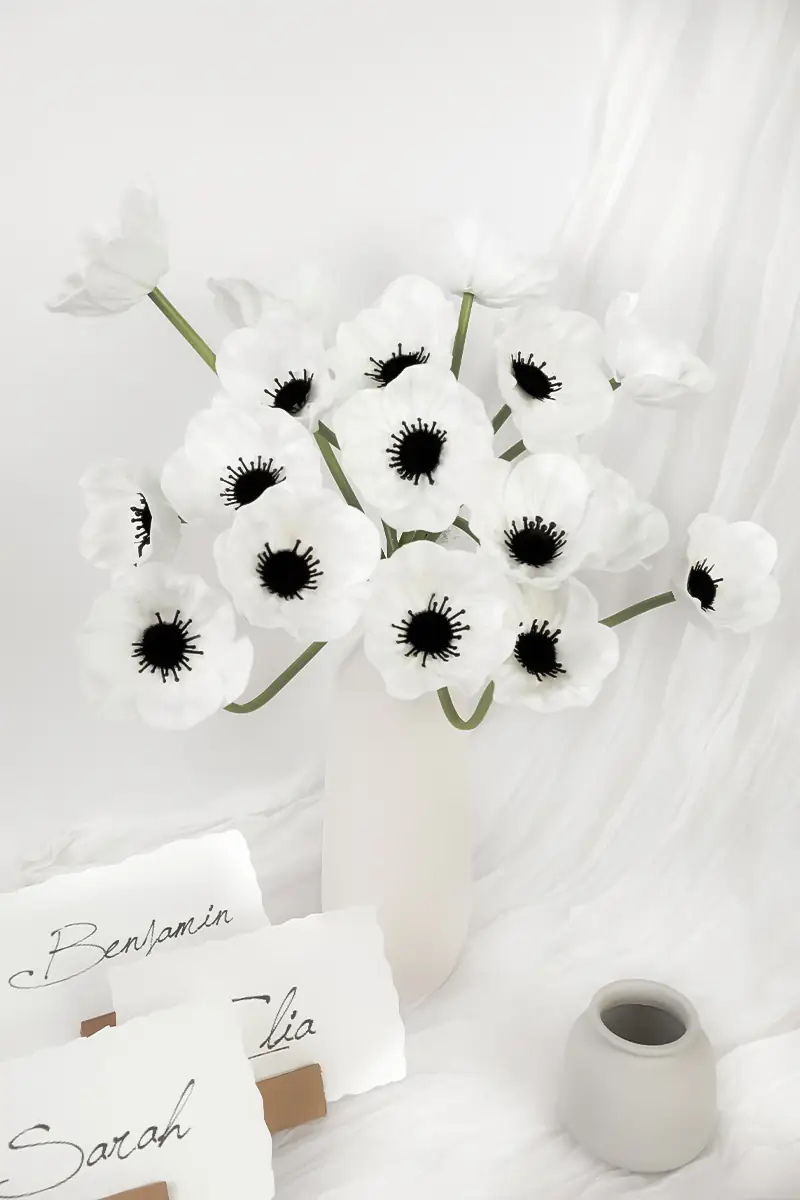
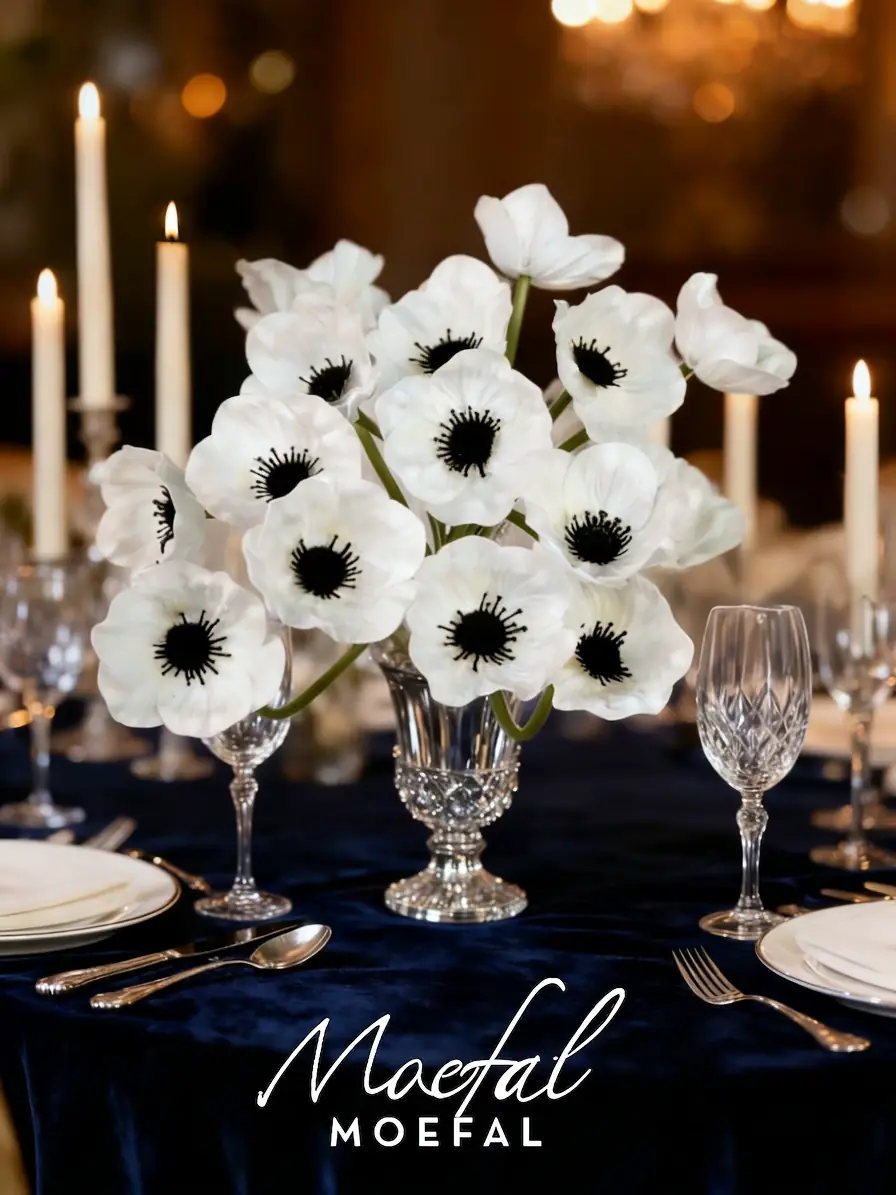
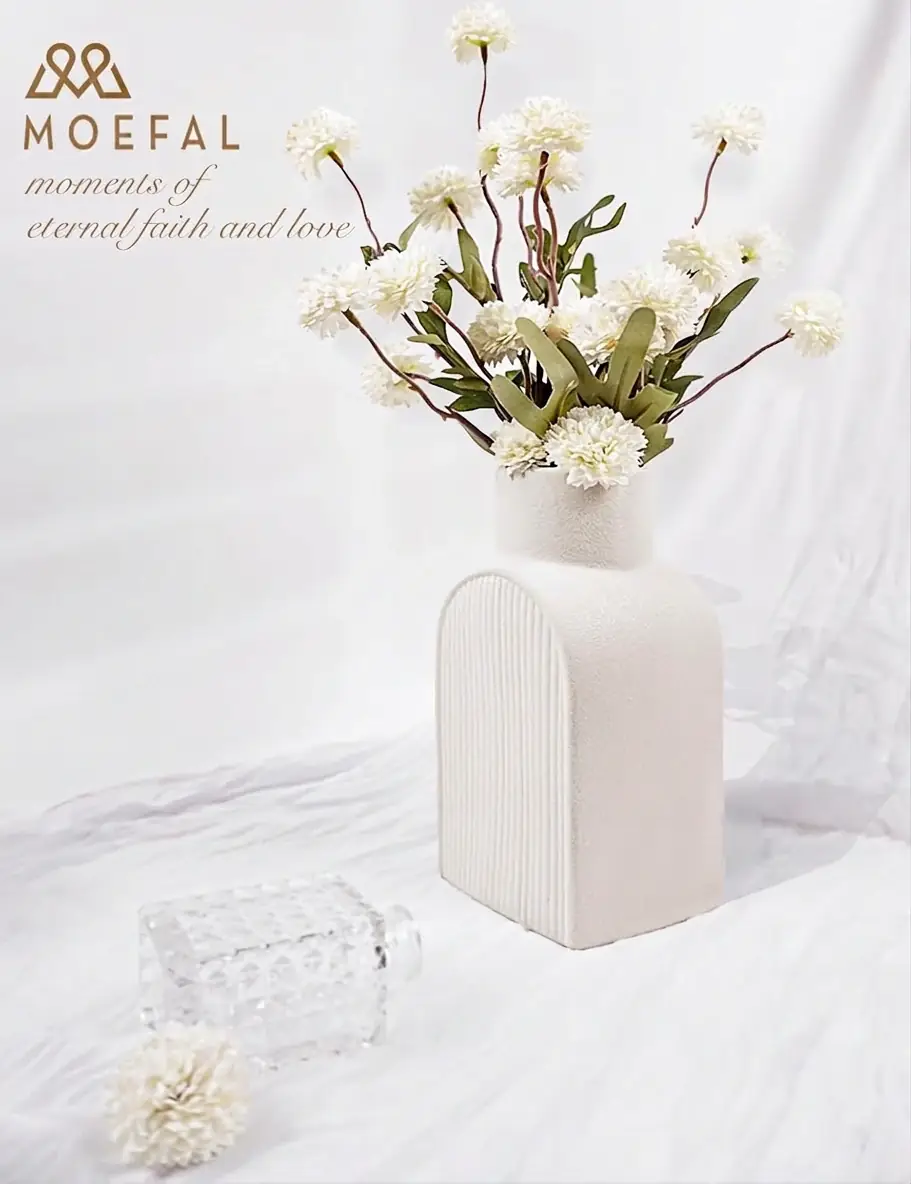
Whether you are hosting a dinner party or just enjoying a slow family meal, it’s always a good time to refresh the table. 🥂 Crisp white blooms against a dark tablecloth create an instant elegant atmosphere for any gathering.
The short answer: for most wedding tables, choose a low centerpiece that stays under about 12 inches tall so guests can talk across it, and plan on one 18–34 piece flower box or two to three stem packs per table. Build it in a low bowl from large blooms first, then fill the gaps with a soft filler such as pompon mums. If you want height, raise a low arrangement on a pedestal or candle stand rather than buying longer stems.
Low or tall: which centerpiece height works?
Height is the first decision, because it decides everything else — the vase, the stem length and how many flowers you need.
- Low centerpieces (under about 12 inches) keep sight lines open. They suit round tables, smaller venues and long dinners where guests want to talk. Most of the flowers in our shop — 8-inch stems in the DIY boxes, 11-inch ranunculus and anemones — are built for exactly this height.
- Tall centerpieces (above eye level, roughly 24 inches and up) work in big rooms with high ceilings. The flowers sit on a tall stand so guests look under them, not through them.
- The in-between zone (about 14–22 inches) is the one to avoid: it lands right in front of faces.
With artificial flowers you have one advantage a florist does not: weight and water are not a problem. A low arrangement can sit on top of a pedestal bowl, a cake stand or a tall candlestick riser to give you height without a single extra stem.
How many stems do you need for a centerpiece?
The answer depends on the size of the container and how full you want it. These are the counts we plan with for a low bowl about 6 to 8 inches across:
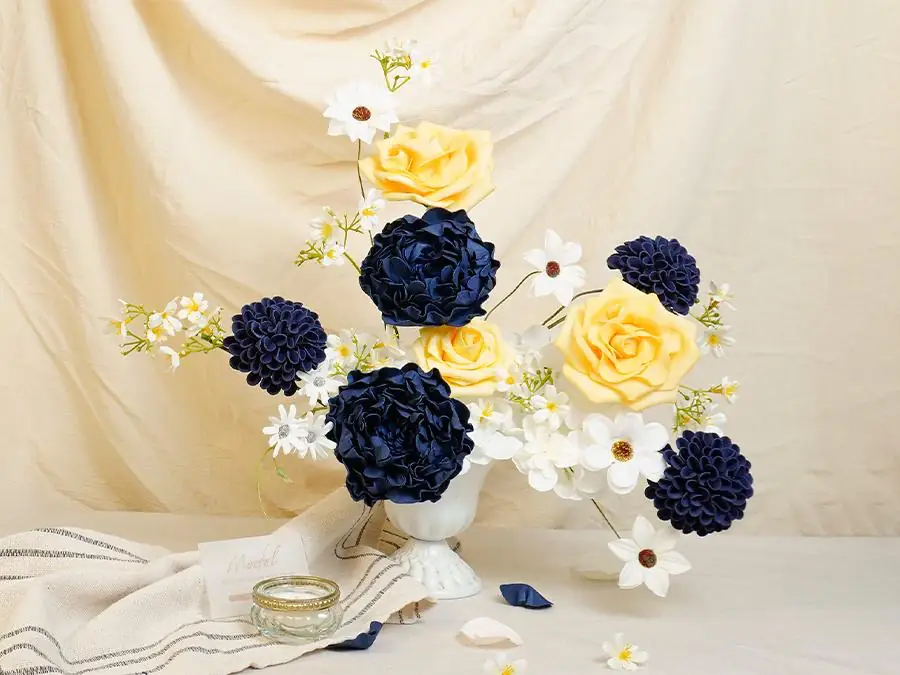
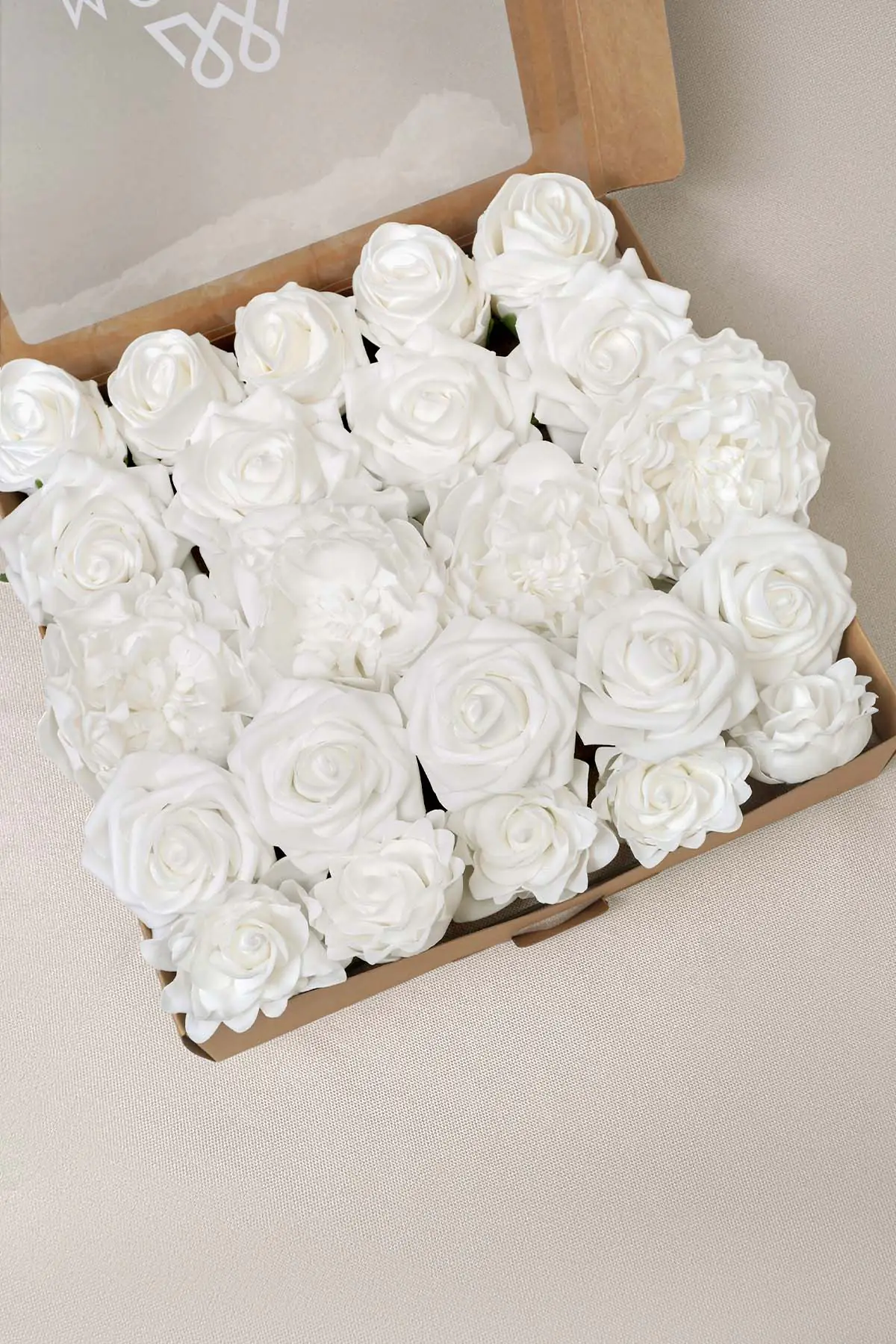
- A full, lush centerpiece: one DIY flower box (18–34 pieces depending on the box). Each box is designed to make one centerpiece or one bridal bouquet.
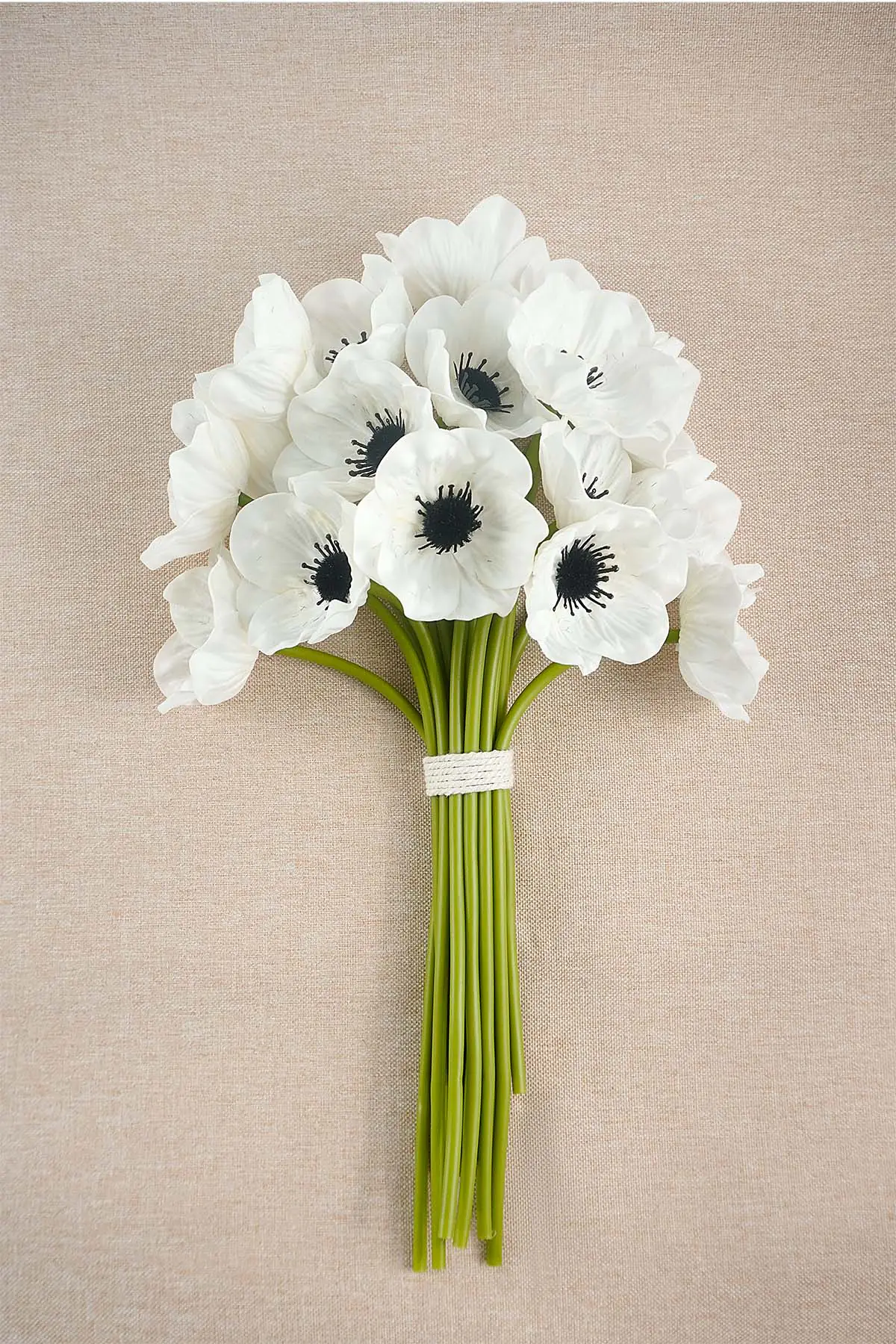
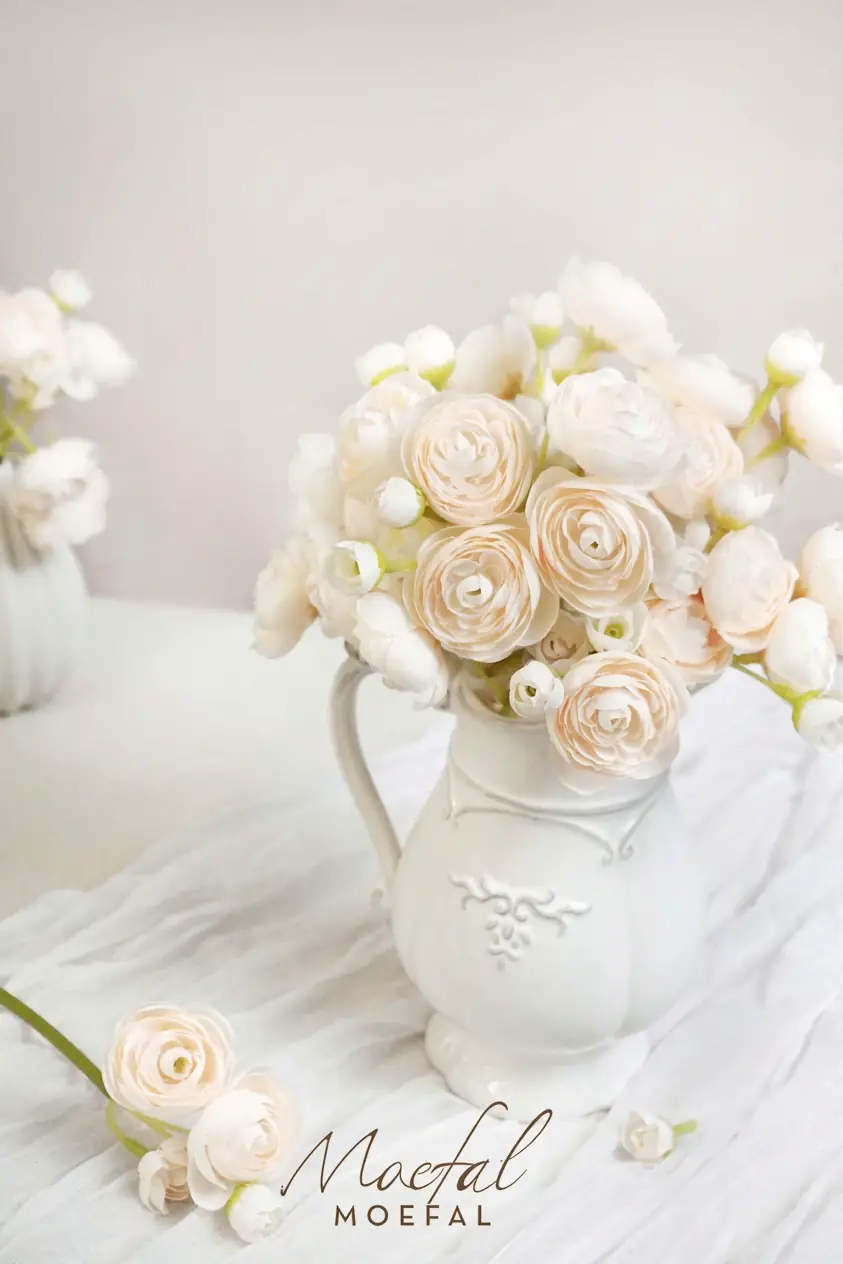
- A ranunculus or anemone centerpiece: one 18-stem pack; add a second pack for a larger bowl or a mounded look.
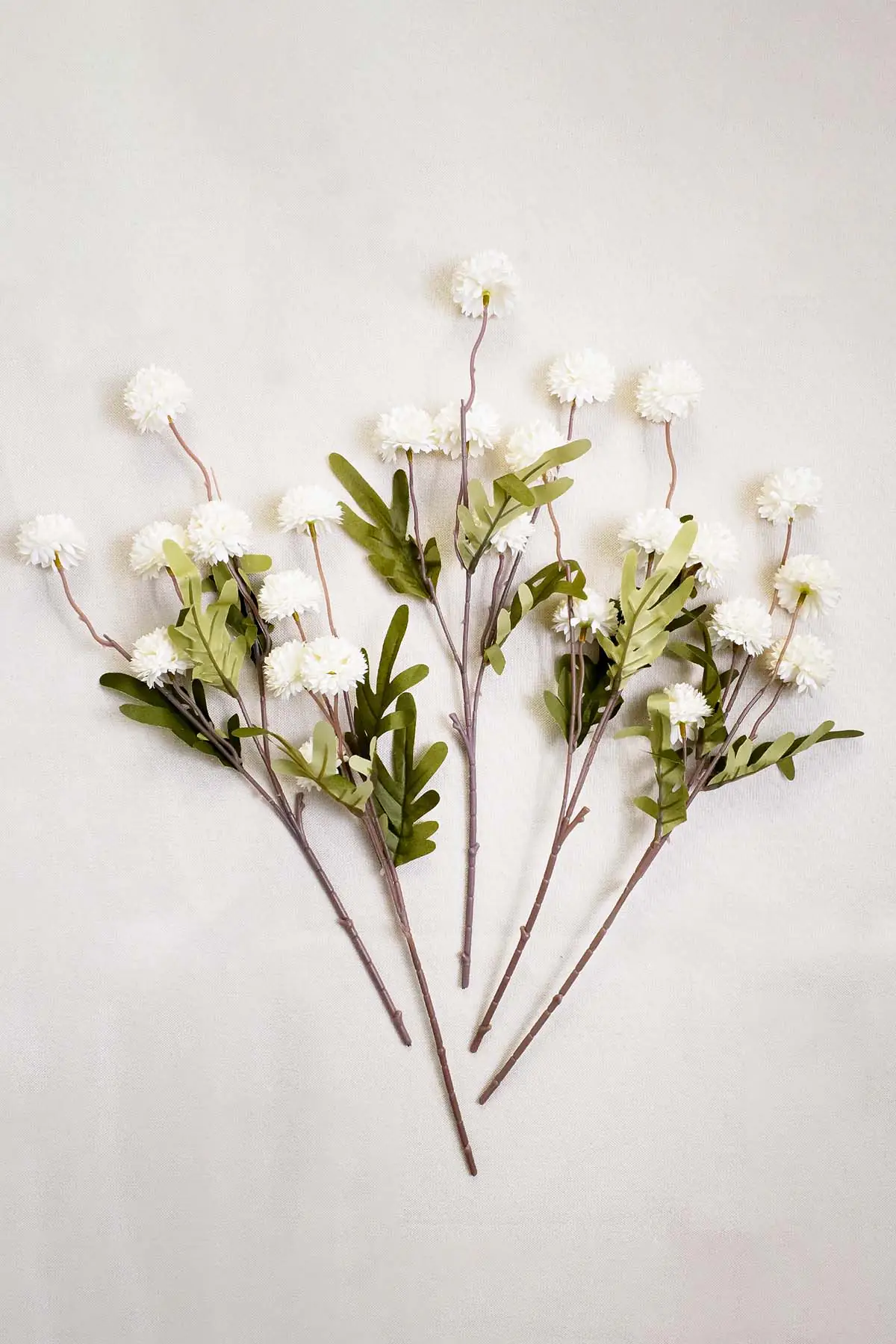
- Pompon mums as filler: one 5-stem pack gives you 25 small heads — enough to fill the gaps in one or two centerpieces.
- A bud vase: one to three stems each.
For a guest count, multiply by tables, not guests. A 60-inch round seats eight to ten people and takes one centerpiece; an 8-foot banquet table looks best with either one long, low arrangement or a run of five to seven bud vases.
How to build a low centerpiece, step by step
- Choose a low, wide container. A ceramic bowl, a compote or a footed urn about 6–8 inches across. Put a block of dry floral foam inside, or a ball of chicken wire if you prefer not to use foam.
- Start with the biggest blooms. Peonies, hydrangea heads or the large roses from a flower box go in first, grouped in threes and angled outward so the bowl reads full from every seat.
- Add the mid-size flowers. Ranunculus, anemones or dahlias go between the large heads, slightly lower so they look tucked in rather than stacked on top.
- Fill the gaps with texture. This is where pompon mums or small buds earn their place: they hide the foam and soften the outline.
- Finish with greenery. Let a few leaves trail over the rim so the arrangement feels grown, not placed.
- Check it from a chair. Sit down at the table and look across. If you cannot see the person opposite, take it down an inch.
Every flower bends on a wire stem, so you can shorten and angle each one to the height you want. If your flowers were packed tight for shipping, our guide to fluffing faux flowers after delivery shows how to open them up first.
Pompon mums: the filler that makes faux centerpieces look full
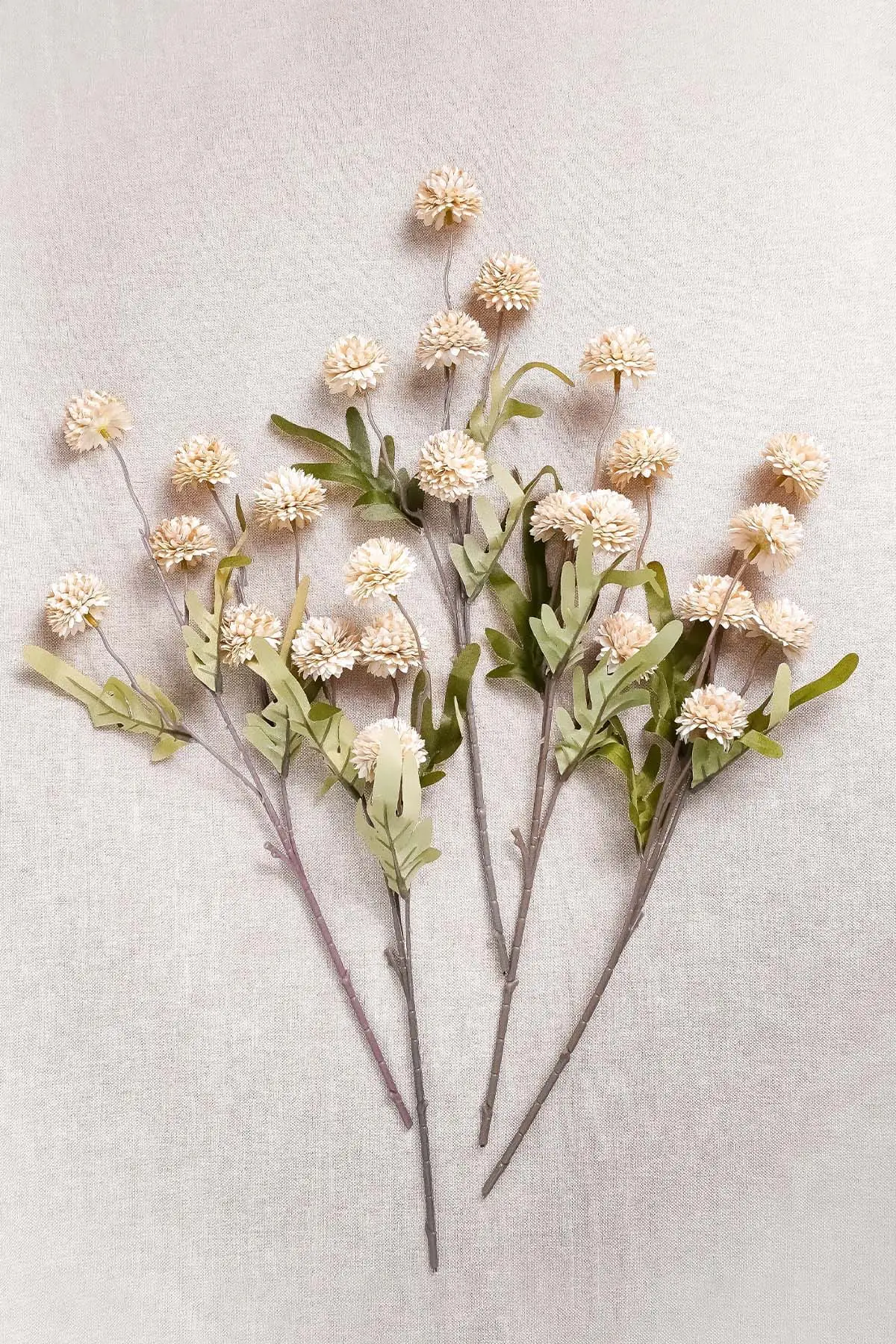
Soft, fluffy and undeniably cute, pompon mums are the quiet worker of a centerpiece. Each stem carries five round heads about 1.6 inches across, made from layered silk petals with a matte finish — the way a fresh button mum actually looks. Because the heads are small and spherical, they slip between larger flowers and fill space without competing with them.
White pompons add airy lightness. Tuck them around white anemones for an all-white table, or pop a few stems into a textured ceramic vase for a simple white-on-white look. A customer who needed them for a centerpiece wrote that the color is "a nice neutral that works with any palette."
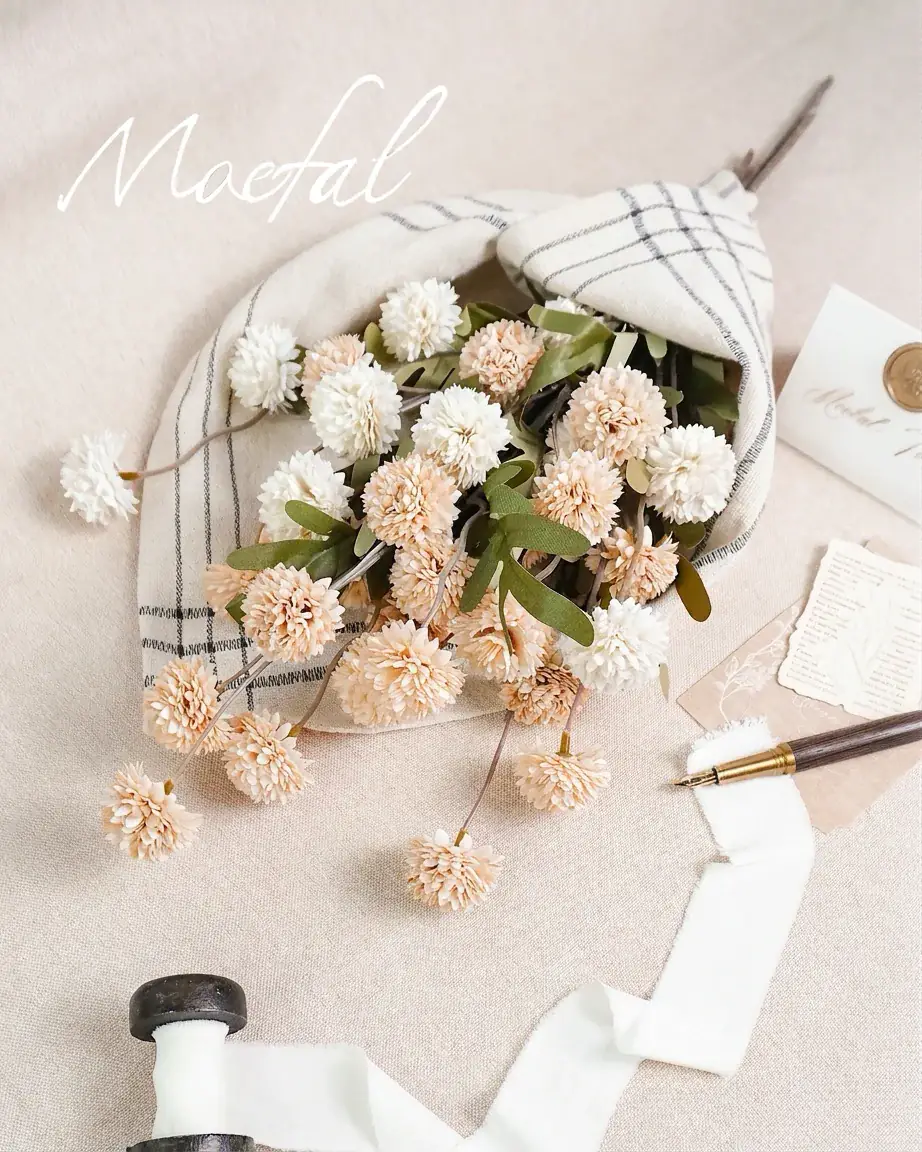
Beige pompons do something different. Not quite yellow, not quite brown, the creamy champagne shade works as a bridge between white blooms and greenery and gives an arrangement an heirloom, vintage feel. It also picks up the colors around it: one customer noticed that next to pink flowers "it really brought about the pink." Pair beige pompons with white roses or peonies — the small color shift makes the white look brighter.
Browse both shades on the pompon mums page.
Bud vase runs for long banquet tables
On a long table, a single central arrangement leaves the ends bare. A line of bud vases fixes that and costs fewer flowers than you might think.
- Mix three heights of vase and stagger them down the center of the table with candles in between.
- Use one to three stems per vase: a single anemone, a pompon stem with its five heads, or a small cluster of ranunculus.
- Repeat colors, not flowers. Five vases in the same palette but different flowers look collected; five identical vases look like a catalog.
Large single blooms also work alone in a bud vase. Our anthurium arrangement ideas show how two or three sculptural stems can carry a table on their own.
Matching centerpieces to your wedding palette
Centerpieces are the flowers your guests look at longest, so they should repeat the palette of the bouquets. Start from your color family and choose one hero flower plus one filler:
- All white and ivory: white anemones with black centers, white pompon mums and a white flower box — see the whites and ivory collection.
- Warm fall tones: terracotta peonies with beige pompons, from the terracotta and amber family.
- Soft romantic pinks: a blush flower box with dusty rose ranunculus from blush and dusty rose.
- Navy and blue: navy peonies or dahlias with white filler from navy and dusty blue.
For seasonal combinations with hex codes, see our fall wedding color palettes for 2026.
After the wedding: centerpieces as home decor
Fresh centerpieces are usually thrown away the next morning. Faux ones can go home with your parents or bridesmaids, or move straight onto your own dining table. A low bowl of white blooms on a dark tablecloth looks just as good at a Sunday dinner as it did at the reception — which is where this post started. For more ideas by room, read our guide to styling faux florals at home.
Frequently asked questions
How tall should a wedding centerpiece be?
Keep low centerpieces under about 12 inches so guests can see and talk across the table, or go above eye level — roughly 24 inches and up — on a tall stand. Avoid the 14–22 inch range, which blocks faces.
How many flowers do I need for one centerpiece?
For a low bowl about 6–8 inches wide, plan on one DIY flower box (18–34 pieces) or one to two 18-stem packs of ranunculus or anemones, plus a pack of pompon mums as filler.
What is the best filler flower for a faux centerpiece?
Pompon mums. Each stem has five small round heads, so one 5-stem pack gives you 25 heads to fill gaps between larger flowers and hide the foam.
Can I make wedding centerpieces ahead of time with artificial flowers?
Yes. Artificial flowers need no water and do not wilt, so you can build every centerpiece weeks before the wedding, store them in boxes and carry them to the venue on the day.
How many centerpieces do I need for my wedding?
One per guest table. A 60-inch round seats eight to ten guests; long banquet tables look best with one long, low arrangement or a run of five to seven bud vases per 8-foot table.
Shop the story
The flowers behind the centerpieces in this guide — a hero bloom, two fillers and a complete box.