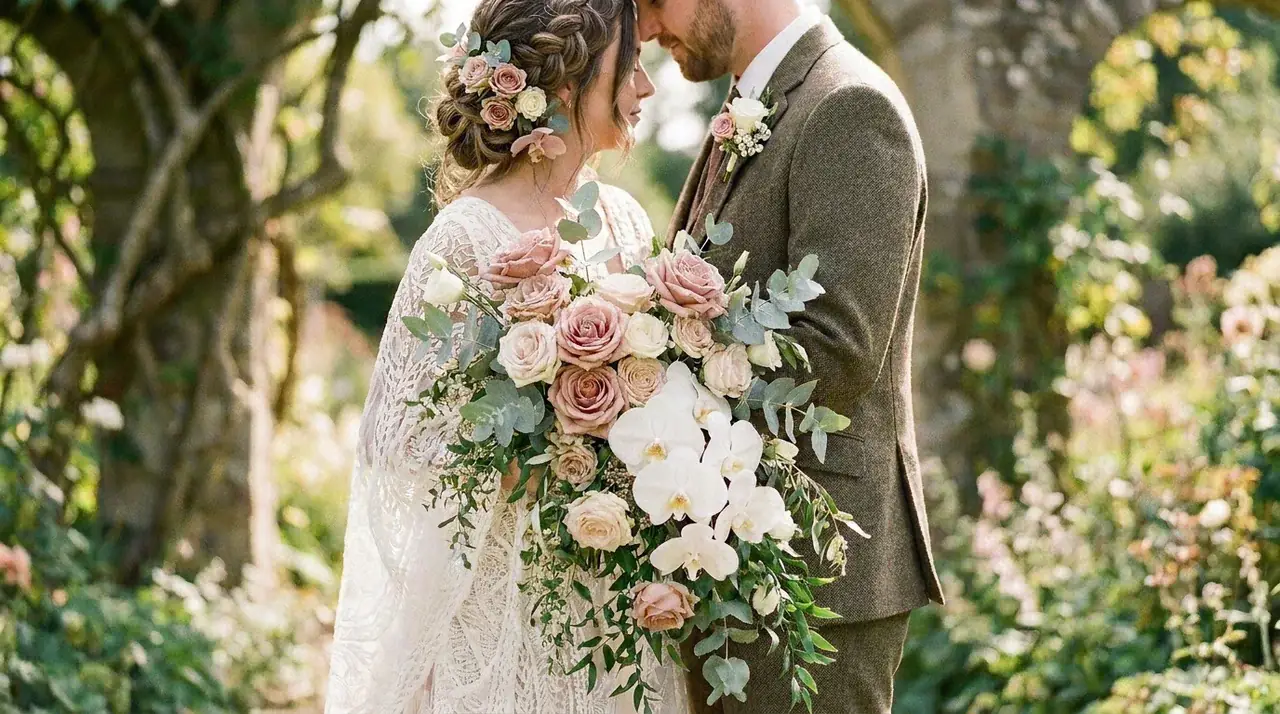
The short answer: choose ivory wedding flowers if your dress is ivory, champagne or off-white, if your skin has warm undertones, or if the reception is lit by candles; choose pure white if your dress is a bright white, your palette is cool (navy, silver, black) or you want a crisp, graphic look. Mixing the two works only when the whites are warm — a stark blue-white beside cream makes the cream look dull.
Trends come and go, but white is forever. It is pristine, ethereal and effortlessly sophisticated — and in flowers, it is never just one color.
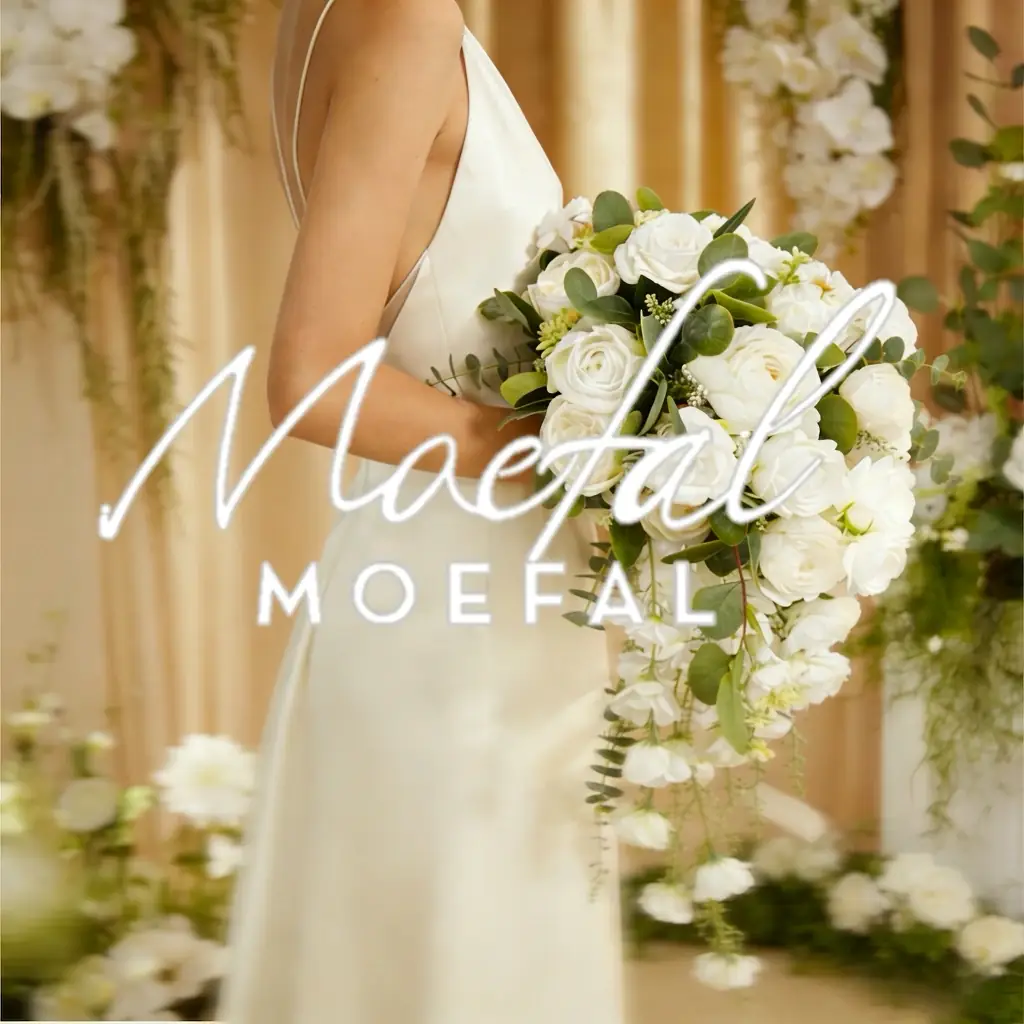
What is the difference between ivory and white flowers?
- Pure white has a cool, slightly blue undertone. It looks crisp and bright, especially in daylight and flash photos.
- Ivory has a warm, faintly yellow undertone — a soft off-white. Next to skin and fabric it looks gentle rather than bright.
- Cream is warmer still, between ivory and pale beige.
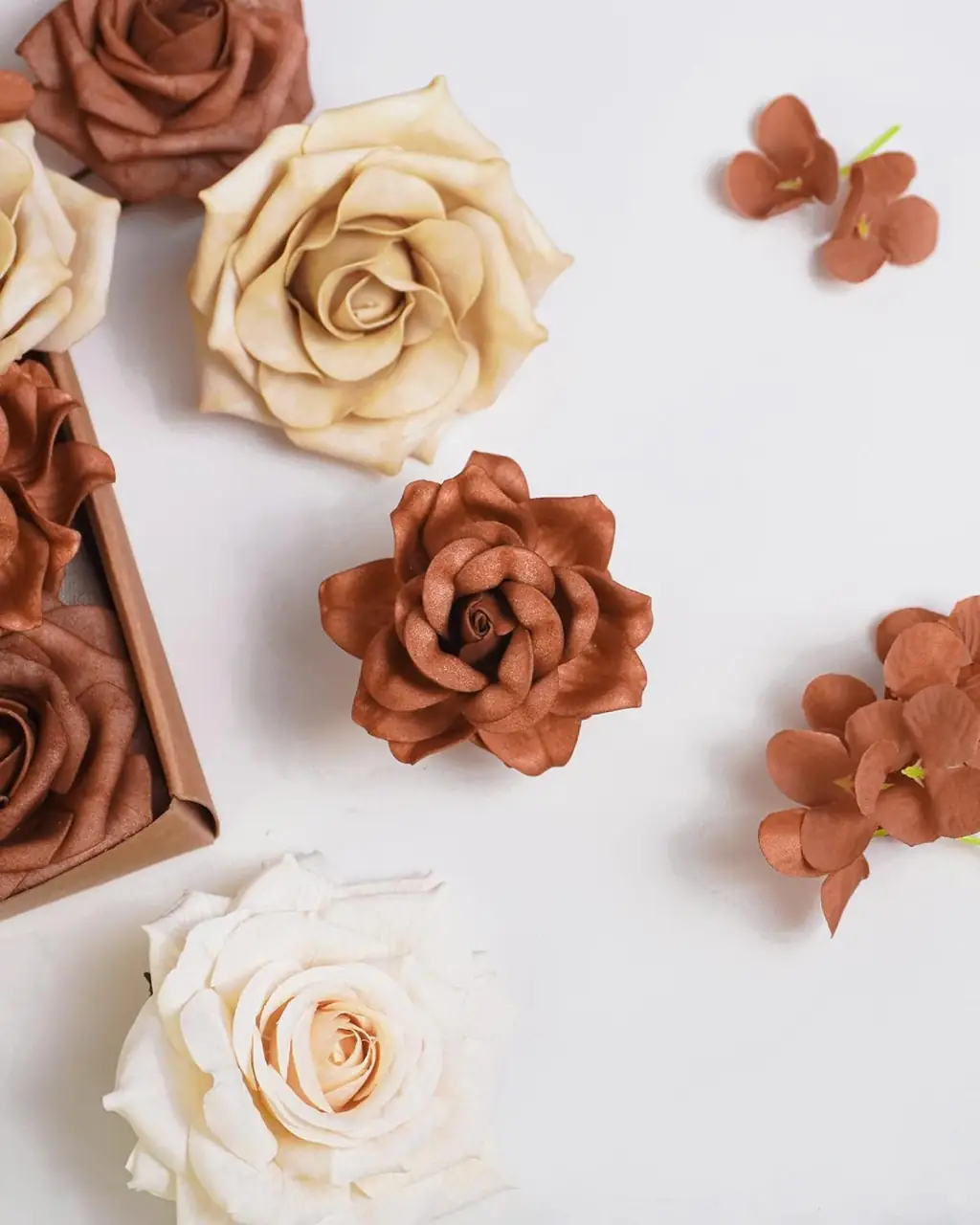
- Champagne adds a faint gold or pink cast and bridges white flowers with wood, brass and candlelight.
Most "white" wedding bouquets are really a mix of these. Layering two or three close whites — snowy, ivory and champagne — is what makes an all-white bouquet look rich rather than flat.
How to choose: dress, skin tone, palette and light
- Match the dress. Hold a flower against the fabric in daylight. A bright white flower can make an ivory dress look yellow; an ivory flower can make a bright white dress look grey. Choose the flower that is the same temperature as the dress or slightly warmer.
- Consider skin tone. Ivory and cream flatter warm and olive skin; crisp white flatters cool and very fair skin.
- Follow the palette. White pairs with navy, black, silver and dusty blue. Ivory pairs with sage, blush, terracotta, gold and wood.
- Check the light. Candlelight and tungsten bulbs turn everything warmer, so pure white reads ivory in the evening anyway; in bright outdoor sun, ivory can look muddy next to a white dress.
What ivory wedding flowers look like
Ivory flowers read soft, vintage and garden-picked. These are the warm whites in our shop, all part of the whites and ivory collection:
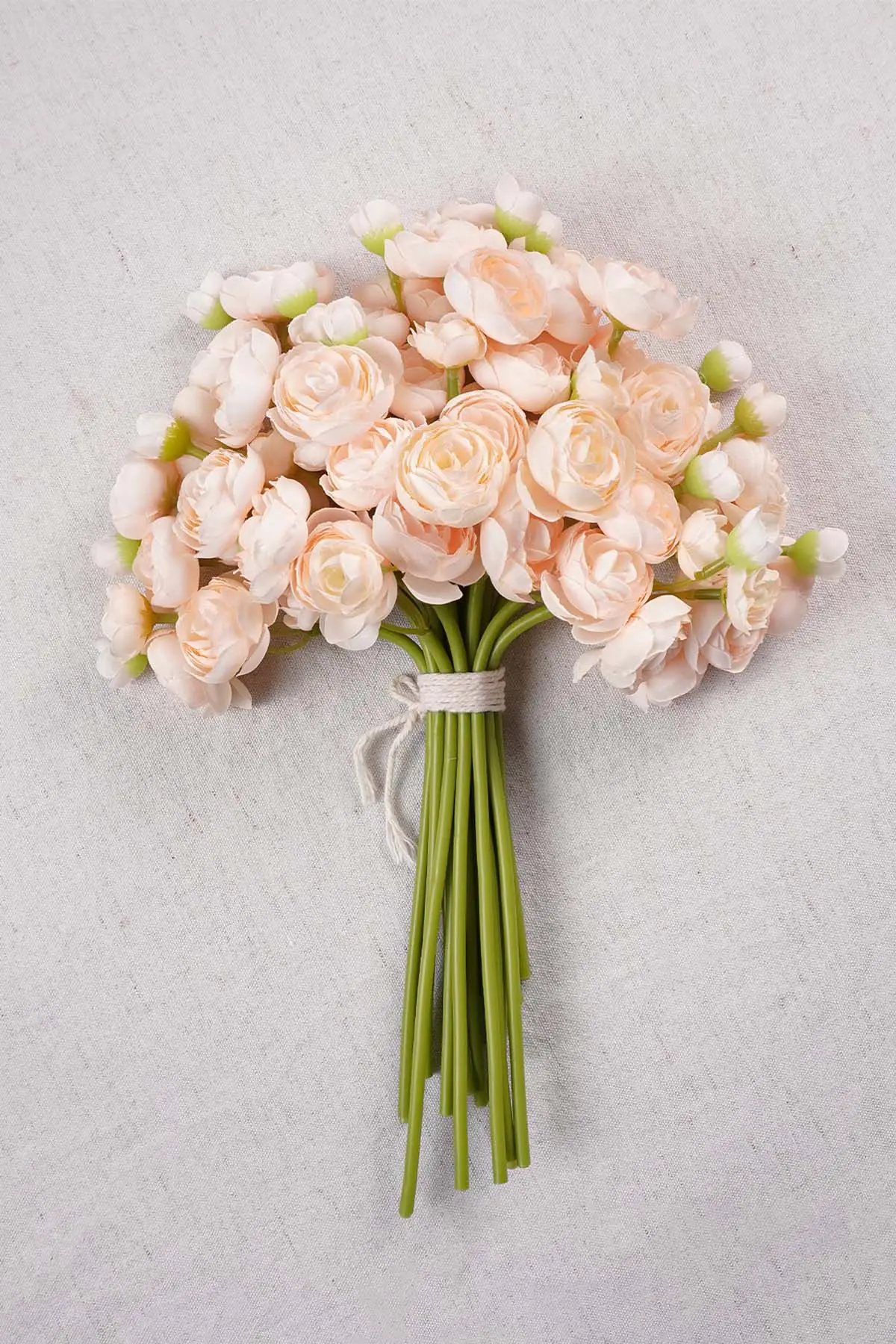
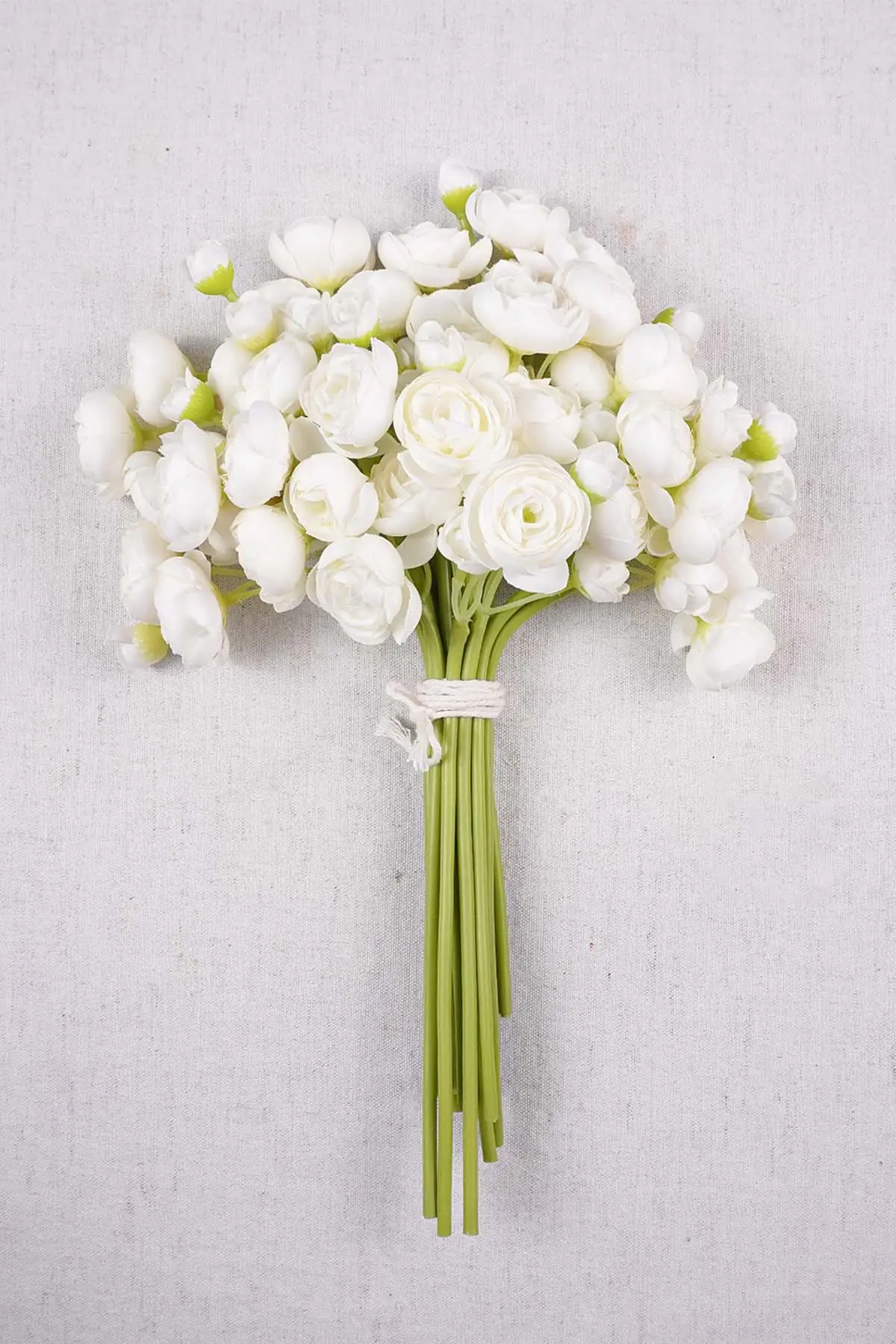
- Cream ranunculus — a cream-to-white gradient on each stem, a garden ivory rather than stark white.
- Ivory white ranunculus — a clean, even ivory that photographs well under both daylight and flash.
- Ivory dahlias — a warm champagne white in soft foam that reads champagne by candlelight and cream in daylight.
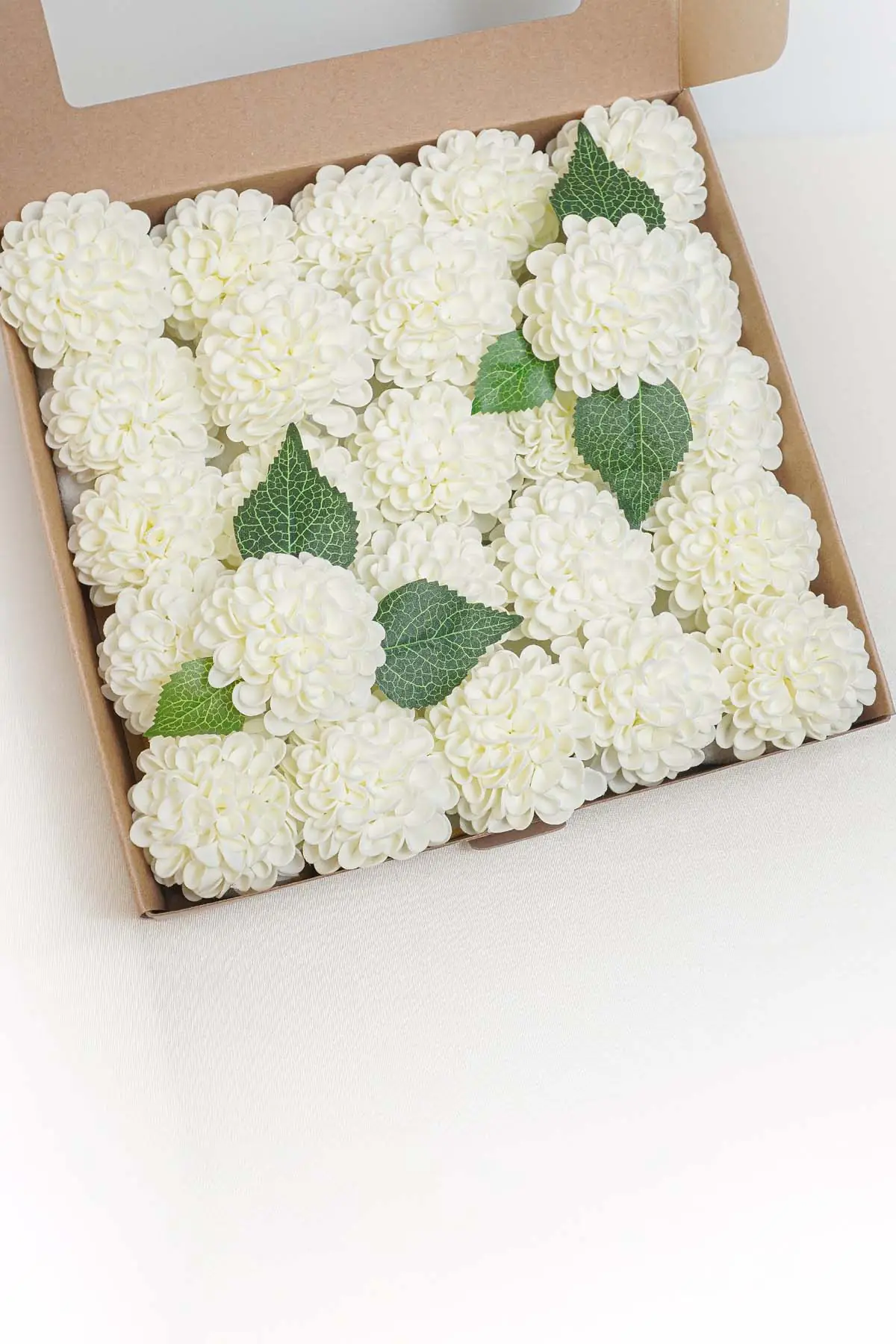
- Beige pompon mums — a creamy champagne filler that bridges white blooms and greenery.
For a whole palette built on warm whites, see our cream and sage wedding palette.
What white wedding flowers look like
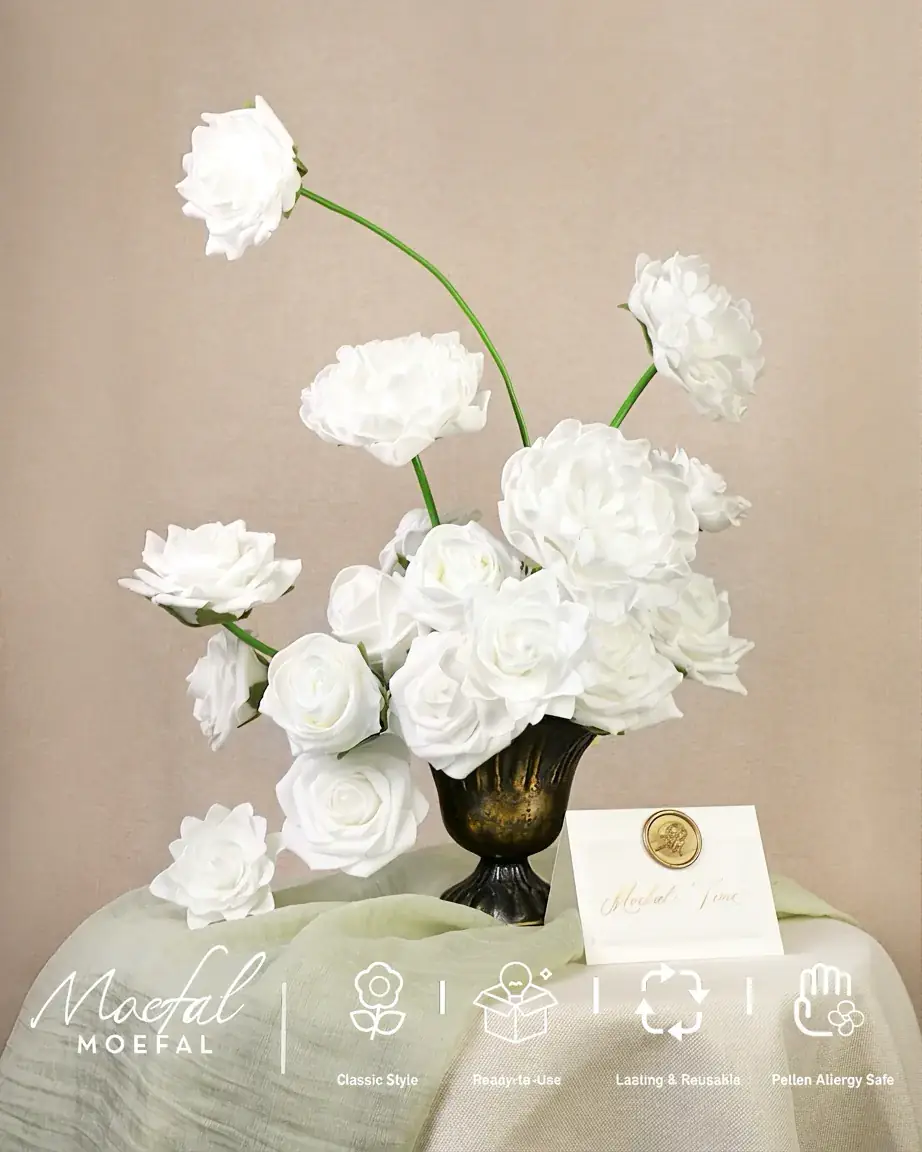
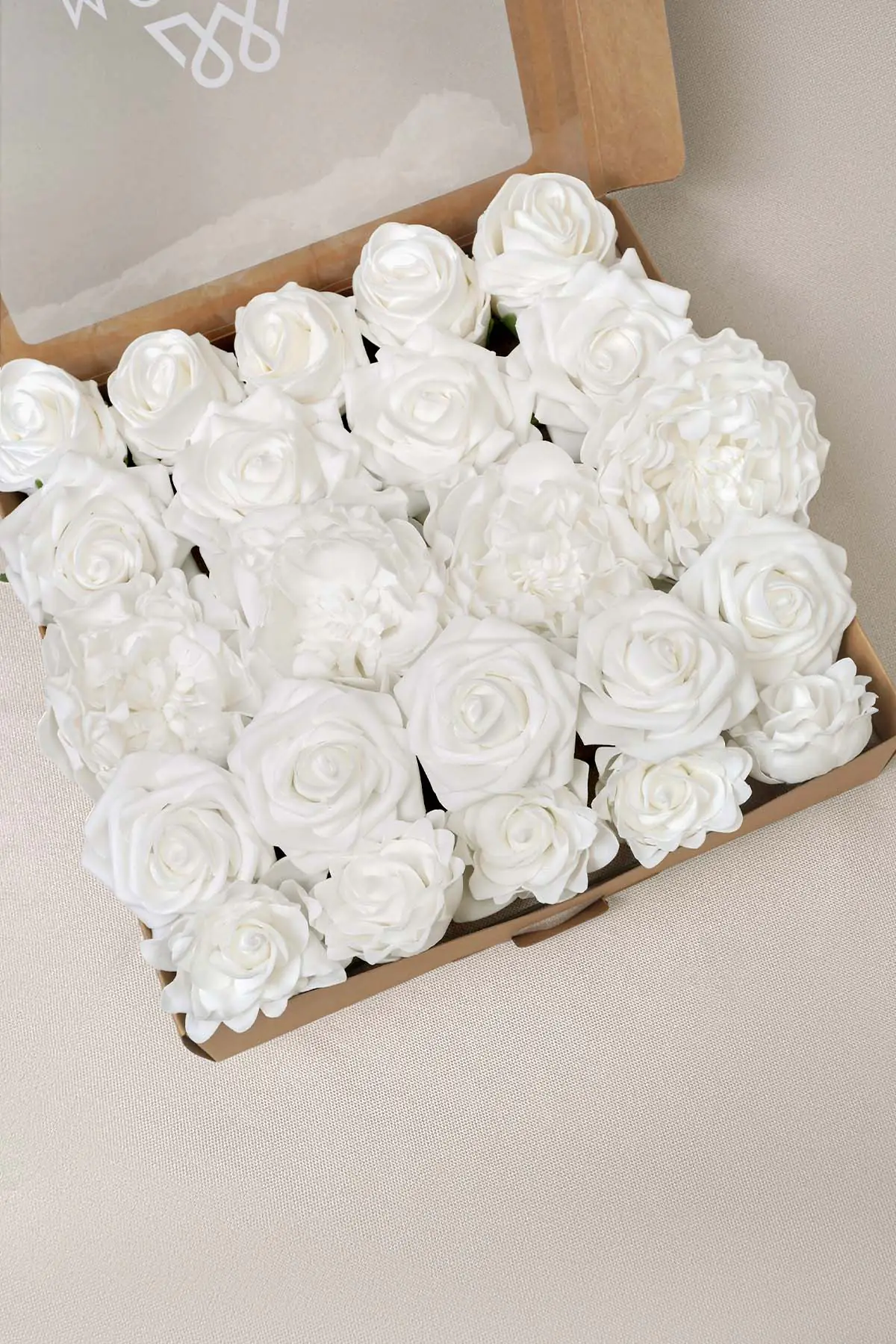
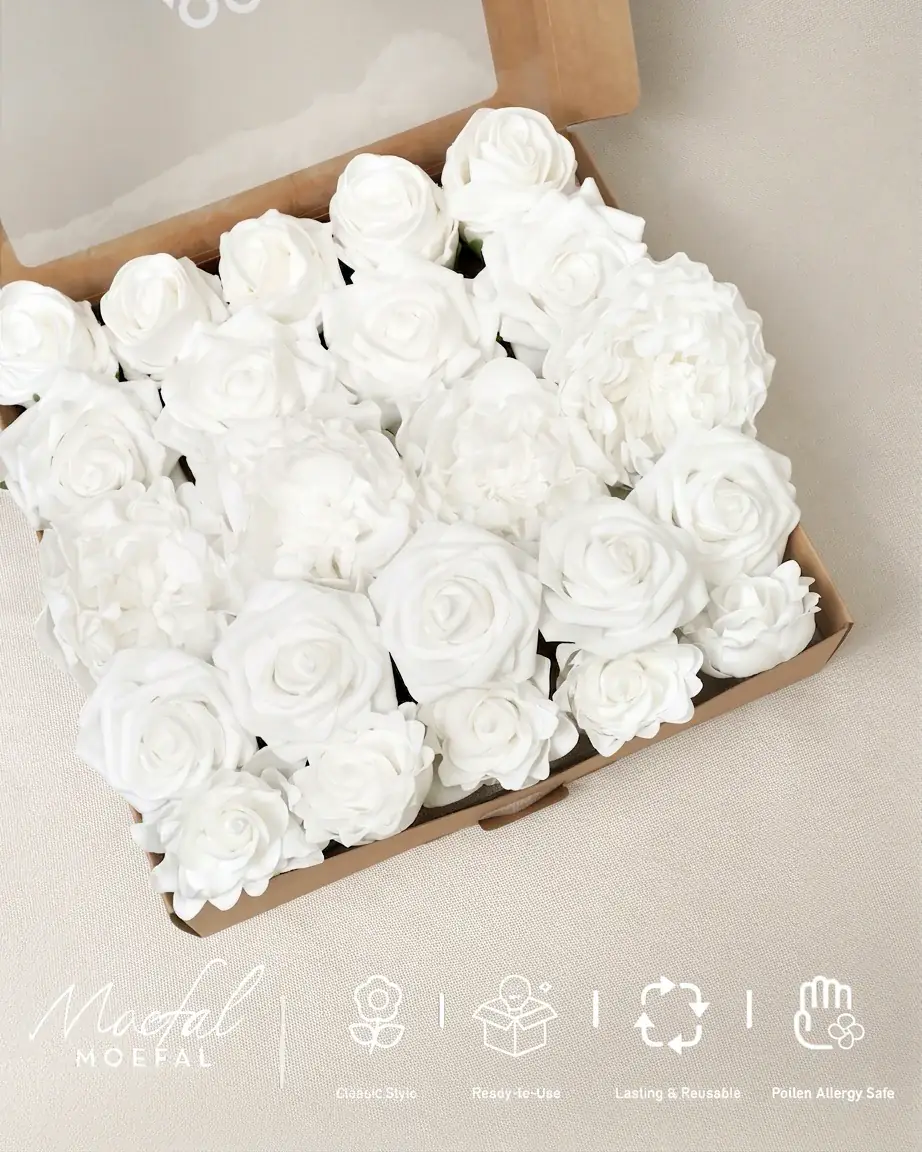
Pure white flowers look crisp, modern and graphic. There is nothing quite like the texture of a white peony: our white flower box brings together large ruffled peonies, classic roses and gardenias in a velvety matte foam — not shiny plastic — so the petals catch light softly in flash photos and golden-hour portraits.
One customer fluffed hers with a warm hairdryer straight out of the box and found it "super easy to make a gorgeous nice sized arrangement." White anthuriums add a sculptural line, and white pompon mums fill gaps between larger heads.
White anemones: contrast without color
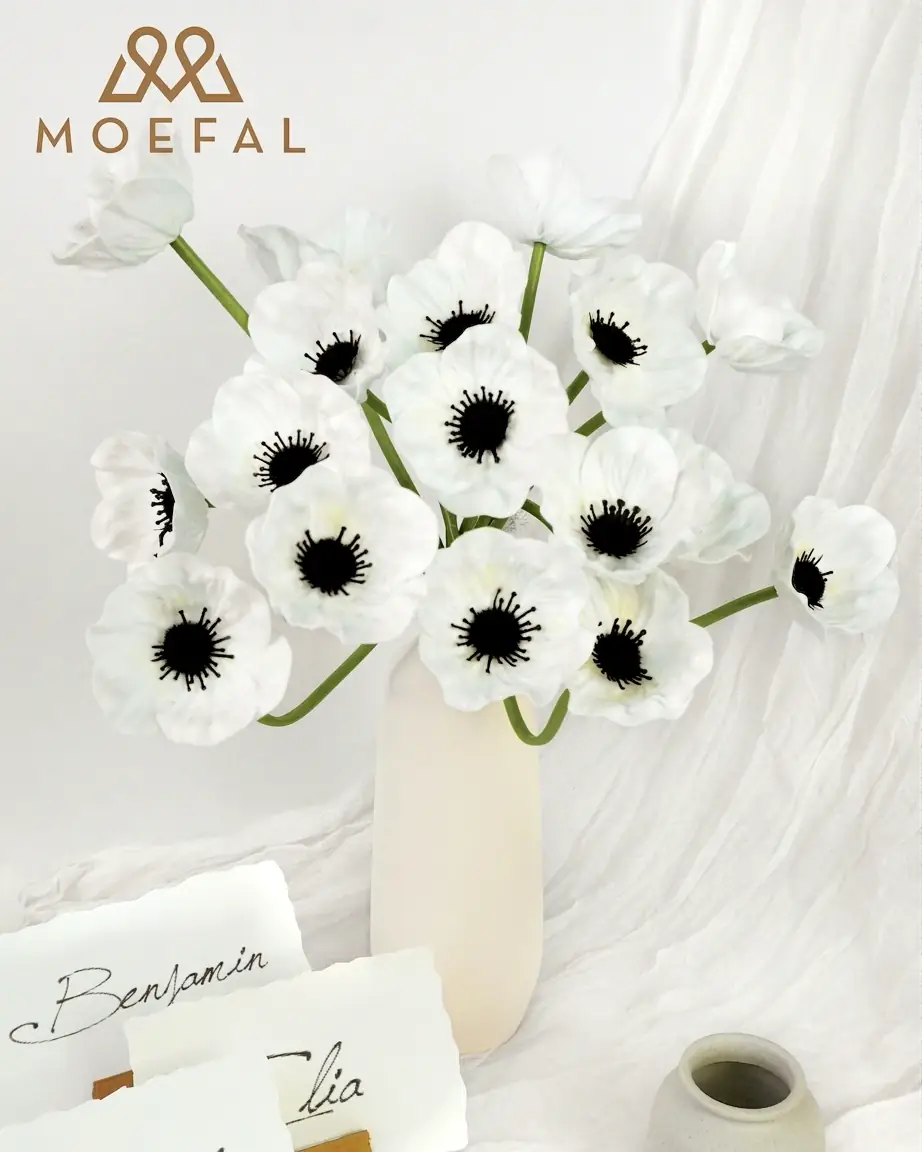
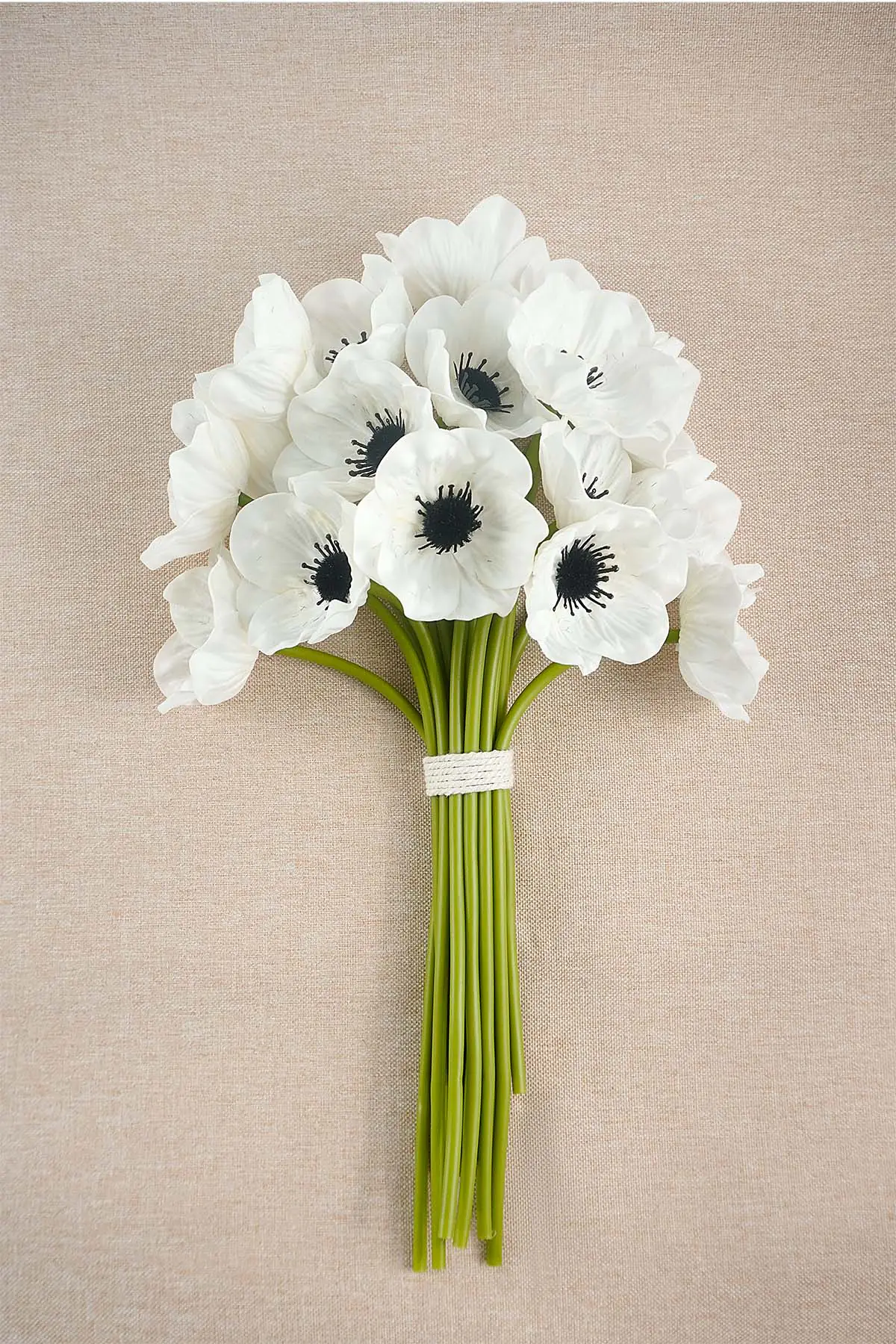
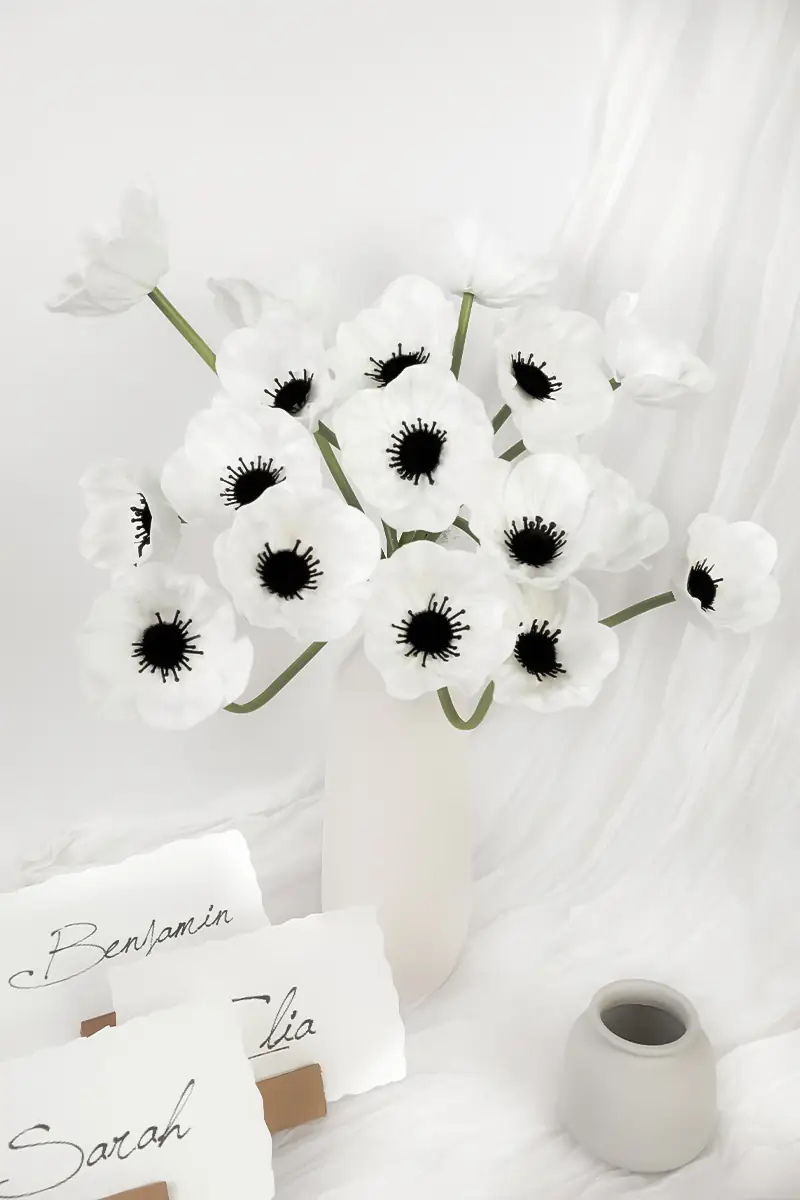
Bold, graphic and unforgettable: the white anemone is defined by its inky black center framed by crisp white petals. It gives an all-white wedding contrast without adding a color, and it is the natural choice for black-and-white or modern minimalist weddings.
Our anemones are real-touch polyurethane, with blooms about 2.7 inches wide on 11.4-inch stems, and the slightly matte petal surface of the real flower. Bundle all 18 stems together for a clean, architectural bouquet, or mix a few into greenery to add depth. Customers describe them as "so real looking" and say they "look n feel so real."
Keeping an all-white wedding from looking flat
White is never boring when you work in texture rather than color. Our favorite all-white weddings mix at least three flower shapes and a lot of green:
- Round and ruffled: peonies and roses for volume.
- Small and layered: ranunculus and pompon mums for texture between the big heads.
- Graphic: anemones or anthuriums for a sharp line or a dark center.
- Green: eucalyptus-style leaves or trailing greenery, which do half the work of making white flowers look alive.
- Light: candles, gold or brass, and linen in a slightly different white from the flowers.
Photographing white flowers
White petals are the first thing to lose detail in a bright photo. Ask your photographer to expose for the bouquet in close-ups, hold the bouquet slightly away from a white dress so the two do not merge, and shoot portraits in open shade rather than direct midday sun. Matte petals help: our foam flowers and real-touch anemones reflect less light than shiny fabrics, so the layers stay visible even in flash photos at the reception.
Can you mix ivory and white flowers?
Yes, with two rules. First, keep the mix warm: ivory, cream and champagne layered together look rich; a blue-white flower dropped into a cream bouquet looks like a mistake. Second, give each white a job — the largest blooms in the main shade, the smaller fillers a step warmer or cooler — so the variation looks intentional.
If you need pure white for contrast, put it in a different element: white anemones in the centerpieces, ivory in the bouquets, for example.
How many white flowers do you need?
- Bridal bouquet: one white flower box, or two 18-stem packs of anemones or mini ranunculus.
- Bridesmaid posy: about half a box, or one 18-stem pack.
- Centerpiece: one box or one 18-stem pack in a low bowl, with pompon mums as filler.
- Groom's side: the white boutonniere set — one groom's piece and five for the groomsmen — and white and ivory wrist corsages for mothers.
For stem counts by table size, see wedding table centerpiece flowers; for the groom, see how to wear a pre-made boutonniere.
Frequently asked questions
Should wedding flowers be ivory or white?
Match the temperature of the dress: ivory flowers for ivory, champagne or off-white dresses and warm palettes; pure white for bright white dresses and cool palettes such as navy, black or silver.
Do ivory flowers go with a white dress?
They can look slightly yellow next to a bright white dress, so test a flower against the fabric in daylight. If the dress is pure white, choose white or very pale ivory flowers.
What white flowers are best for a wedding bouquet?
Peonies and roses for a classic look, ranunculus for a layered garden look, anemones with black centers for contrast, and anthuriums for a modern, sculptural line.
Can you mix white and ivory flowers in one bouquet?
Yes, if the whites are warm. Ivory, cream and champagne layered together look rich; a stark blue-white next to cream makes the cream look dull.
What color goes with white wedding flowers?
Green foliage first, then navy, dusty blue, black or silver for a cool look, or blush, sage and gold for a warmer one.
Shop the story
White and ivory flowers from this guide, from our whites and ivory family.